

Volume 17, Issue 2 (March & April 2026)
BCN 2026, 17(2): 229-242 |
Back to browse issues page



Download citation:
BibTeX | RIS | EndNote | Medlars | ProCite | Reference Manager | RefWorks
Send citation to:


BibTeX | RIS | EndNote | Medlars | ProCite | Reference Manager | RefWorks
Send citation to:
Niknamfar S, Mokri A, Nazar E, Rafaiee R, Seyedhosseini Tamijani S M, Hosseini S H et al . A Novel Visual Cue-induced Craving Task for Cigarette Smokers: Development and Validation. BCN 2026; 17 (2) :229-242
URL: http://bcn.iums.ac.ir/article-1-3373-en.html
URL: http://bcn.iums.ac.ir/article-1-3373-en.html
Saba Niknamfar1 

 , Azarakhsh Mokri2 , Eisa Nazar3 , Raheleh Rafaiee4 , Seyedeh Masoumeh Seyedhosseini Tamijani4 , Seyed Hamzeh Hosseini5 , Hamed Ghazvini *6
, Azarakhsh Mokri2 , Eisa Nazar3 , Raheleh Rafaiee4 , Seyedeh Masoumeh Seyedhosseini Tamijani4 , Seyed Hamzeh Hosseini5 , Hamed Ghazvini *6
1- Student Research Committee, School of Advanced Technologies in Medicine, Mazandaran University of Medical Sciences, Sari, Iran.
2- Department of Psychiatry, Faculty of Medicine, Tehran University of Medical Sciences, Tehran, Iran.
3- Psychiatry and Behavioral Sciences Research Center, Addiction Institute, Mazandaran University of Medical Sciences, Sari, Iran.
4- Department of Neuroscience, School of Advanced Technologies in Medicine, Mazandaran University of Medical Sciences, Sari, Iran.
5- Department of Psychiatry, Psychosomatic Research Center, Faculty of Medicine, Sari Imam Khomeini Hospital, Mazandaran University of Medical Sciences, Sari, Iran.
6- Psychiatry and Behavioral Sciences Research Center, Addiction Institute, Mazandaran University of Medical Sciences, Sari, Iran. & Department of Neuroscience, School of Advanced Technologies in Medicine, Mazandaran University of Medical Sciences, Sari, Iran.
2- Department of Psychiatry, Faculty of Medicine, Tehran University of Medical Sciences, Tehran, Iran.
3- Psychiatry and Behavioral Sciences Research Center, Addiction Institute, Mazandaran University of Medical Sciences, Sari, Iran.
4- Department of Neuroscience, School of Advanced Technologies in Medicine, Mazandaran University of Medical Sciences, Sari, Iran.
5- Department of Psychiatry, Psychosomatic Research Center, Faculty of Medicine, Sari Imam Khomeini Hospital, Mazandaran University of Medical Sciences, Sari, Iran.
6- Psychiatry and Behavioral Sciences Research Center, Addiction Institute, Mazandaran University of Medical Sciences, Sari, Iran. & Department of Neuroscience, School of Advanced Technologies in Medicine, Mazandaran University of Medical Sciences, Sari, Iran.
Full-Text [PDF 1029 kb]
| Abstract (HTML)
Full-Text:
Introduction
Tobacco use remains one of the most pressing public health challenges worldwide. According to the World Health Organization (WHO), tobacco kills more than 8 million people annually, including approximately 1.3 million non-smokers who are exposed to second-hand smoke (Sandip Kumar Sinha et al., 2024). As of 2022, there were about 1.25 billion tobacco users aged 15 years and older, a decline from 1.36 billion in 2000 (WHO, 2024). Despite this reduction, the prevalence of tobacco consumption remains alarmingly high, particularly in low- and middle-income countries, where nearly 80% of tobacco users reside (Tauras, 2024).
Nicotine, the primary psychoactive constituent of tobacco, is chiefly responsible for its addictive properties and the reinforcing effects that sustain smoking behavior. One of the greatest obstacles in smoking cessation is the high rate of relapse, often triggered by exposure to smoking-related cues that elicit strong cravings (Reid et al., 1998). Consequently, understanding the mechanisms that underlie craving is critical for designing effective interventions to prevent relapse and support long-term abstinence.
Craving is formally recognized as a diagnostic criterion for substance use disorders in the diagnostic and statistical manual of mental disorders, fifth edition (DSM-5), where it is defined as an intense desire or urge to consume a substance in response to internal states or external cues (Shmulewitz et al., 2023). Ludwig’s theory distinguishes between two types of craving: withdrawal craving, which arises from the absence of the substance, and cue-induced craving, which is triggered by environmental cues associated with substance use. The latter is particularly potent in eliciting strong urges and is a significant predictor of relapse.
Ludwig’s theory conceptualizes craving as arising from two primary sources: withdrawal craving, which emerges in the absence of the substance and is driven by withdrawal symptoms, and cue-induced craving, which is triggered by environmental stimuli previously associated with substance use. The latter is particularly powerful, as it not only provokes strong urges but also serves as a robust predictor of relapse (Witteman et al., 2015). Cue-induced craving is grounded in the principles of classical conditioning. Neutral stimuli, such as a lighter or cigarette packaging, can become conditioned cues when repeatedly paired with the reinforcing effects of smoking. These cues can subsequently provoke multiple forms of reactivity, including psychological responses (e.g. craving, anticipation of pleasure), physiological responses (e.g. changes in heart rate, temperature, or withdrawal-like symptoms), and behavioral responses (e.g. drug-seeking actions and attentional biases toward smoking-related stimuli). A large body of evidence suggests that cue reactivity not only predicts relapse but may also provide valuable insights for developing targeted therapeutic strategies (Vafaie & Kober, 2022). Similarly, Nazari et al. (2025b) reported that coenzyme Q10 suppressed cue-related reinstatement and improved cognition, further supporting the importance of cue-reactivity mechanisms in relapse vulnerability (Nazari et al., 2025a).
In experimental settings, craving can be reliably induced through various methods, such as exposure to drug-related imagery, paraphernalia, and verbal or pictorial cues. More recently, immersive technologies, such as virtual reality have been employed to enhance ecological validity in craving induction paradigms. These approaches have been applied across a range of substances—including cocaine, heroin, alcohol, and methamphetamine, with consistent evidence that cue exposure elicits craving responses. However, relatively few studies have investigated cue-induced craving in cigarette smoking users, despite evidence linking craving intensity to relapse risk in this population (Grodin et al., 2019; Lin et al., 2022).
In the context of substance use, research has increasingly emphasized the critical role of cue-induced craving in understanding the physiological and neural mechanisms that contribute to relapse. Craving induction tasks are widely used to investigate these processes, with the majority relying on visual cues—such as images of individuals smoking in public places, cigarette packaging, or ashtrays—to elicit craving responses. Therefore, the present study aimed to develop and psychometrically validate a culturally adapted visual cue-based craving induction task, providing a standardized tool for future experimental and clinical research on nicotine dependence.
Materials and Methods
Participants
A total of 240 adult cigarette smokers (120 males and 120 females) were enrolled in this study. Eligibility criteria required participants to report daily cigarette use of at least 10 cigarettes per day for a minimum of two consecutive years. All individuals were treatment-seeking and were recruited from the waiting lists of a specialized outpatient stimulant-use treatment center in Tehran, Iran.
In addition to self-reported smoking history, inclusion was contingent upon physician-confirmed nicotine dependence, as defined by the DSM-5. Participants were excluded if they had a personal or family history of major psychiatric or neurological disorders (e.g. epilepsy, stroke), a history of neurosurgical procedures, or current dependence on any psychoactive substance other than nicotine.
The study was conducted in accordance with the principles of the Declaration of Helsinki and was approved by the Ethics Committee of Mazandaran University of Medical Sciences. Written informed consent was obtained from all participants prior to enrollment.
Study design
The study was carried out at Mazandaran University of Medical Sciences between 2023 and 2024. Potential participants underwent an initial screening through a structured diagnostic interview based on DSM-5 criteria to assess psychiatric and substance use disorders. After applying the inclusion and exclusion criteria, 240 eligible individuals were enrolled. To collect sociodemographic and personal background information, participants completed a structured questionnaire that included age, gender, marital status, educational level, occupation, monthly income, and sexual activity. Smoking behavior and nicotine dependence were assessed using the Fagerström Test for nicotine dependence (FTND), a standardized six-item instrument designed to evaluate the severity of nicotine addiction.
The FTND, originally developed by Heatherton et al. in 1991, yields a total score ranging from 0 to 10, with higher scores reflecting greater dependence. Scores were classified into three categories: 1–3 (low dependence), 4–7 (moderate dependence), and 8–10 (high dependence). Previous studies have demonstrated good internal consistency for the original FTND (Cronbach’s α=0.61–0.74). Furthermore, the Persian version of the FTND, validated in Iranian populations, has shown acceptable psychometric reliability (Cronbach’s α=0.75)(Heatherton et al., 1991; Robabeh et al., 2017).
Study procedure
The study procedure was systematically designed and implemented in four sequential phases, as outlined below.
Phase 1: Selection of visual cues and task design
To generate a reliable set of visual cues capable of inducing tobacco cravings, three focus group discussions (FGDs) were conducted with voluntary smokers who were not seeking treatment. The purpose of these discussions was to explore imagery scripts that could elicit cravings, drawing on participants’ personal experiences and memories related to cigarette use. During the FGDs, participants identified several scenarios that commonly triggered cravings, including exposure to cigarettes, smoking paraphernalia (e.g. packs, lighters), and social interactions with peers who smoked. A visual cue was included in the final pool only if it was mentioned in at least two FGDs, ensuring consistency and reliability. To empirically validate the perceptual distinctiveness of these categories, FGDs were presented with the images and asked to classify them into predefined categories. For example, the results confirmed that categories, such as ‘smoking environment’ and ‘smoking shop’ were perceived as distinct by the target population, supporting the validity of the categorical structure used in the main study. An expert panel consisting of psychiatrists and neuroscientists subsequently categorized the selected evocative cues into seven main groups: neutral, instrument, bill, smoking, smoking environment, smoking shop, and consumption type. From these categories, 30 evocative images were finalized, with five images representing each category. To control for non-specific visual stimulation, the expert panel also designed a set of neutral cues. The neutral images served as a baseline condition to contextualize and interpret the craving scores elicited by smoking-related cues.
While the primary statistical analyses focused on reactivity to evocative stimuli, the neutral category provided a reference point to estimate the net cue-induced craving effect. This approach helps distinguish specific craving responses from general reactions to visual stimulus presentation. The neutral set consisted of 12 images with similar visual characteristics but without any association with smoking or cigarettes. To minimize potential carryover effects and enhance craving induction, a sequential block design was adopted. The task consisted of six blocks, each containing five evocative cues and four neutral images, presented in randomized order.
Phase 2: Recruitment of participants for cue assessment
A total of 240 participants were recruited, as described in the participants section. Written informed consent was obtained from all participants prior to data collection. Baseline assessments included the collection of demographic data and administration of the Fagerström FTND. Then, participants proceeded to the cue exposure session.
Phase 3: Cue exposure and craving assessment
During the cue exposure task, participants were instructed to rate the intensity of their craving and subjective urge to smoke in response to each image using a self-reported visual analog scale (VAS) ranging from 0 (“no craving”) to 10 (“strongest craving”). Each image was presented for 10–15 seconds. Participants who reported heightened cravings or exhibited noticeable physiological responses remained in the laboratory until their craving levels returned to baseline. Before leaving, they received a brief psychological intervention designed to reduce residual cravings.
Phase 4: Final selection of cues for craving induction tasks
In the final phase, the pool of images was refined to create two experimental tasks: one for long craving induction and another for short craving induction. The final set included 30 evocative images and 4 neutral images, distributed across the predefined categories (Figure 1).
Tobacco use remains one of the most pressing public health challenges worldwide. According to the World Health Organization (WHO), tobacco kills more than 8 million people annually, including approximately 1.3 million non-smokers who are exposed to second-hand smoke (Sandip Kumar Sinha et al., 2024). As of 2022, there were about 1.25 billion tobacco users aged 15 years and older, a decline from 1.36 billion in 2000 (WHO, 2024). Despite this reduction, the prevalence of tobacco consumption remains alarmingly high, particularly in low- and middle-income countries, where nearly 80% of tobacco users reside (Tauras, 2024).
Nicotine, the primary psychoactive constituent of tobacco, is chiefly responsible for its addictive properties and the reinforcing effects that sustain smoking behavior. One of the greatest obstacles in smoking cessation is the high rate of relapse, often triggered by exposure to smoking-related cues that elicit strong cravings (Reid et al., 1998). Consequently, understanding the mechanisms that underlie craving is critical for designing effective interventions to prevent relapse and support long-term abstinence.
Craving is formally recognized as a diagnostic criterion for substance use disorders in the diagnostic and statistical manual of mental disorders, fifth edition (DSM-5), where it is defined as an intense desire or urge to consume a substance in response to internal states or external cues (Shmulewitz et al., 2023). Ludwig’s theory distinguishes between two types of craving: withdrawal craving, which arises from the absence of the substance, and cue-induced craving, which is triggered by environmental cues associated with substance use. The latter is particularly potent in eliciting strong urges and is a significant predictor of relapse.
Ludwig’s theory conceptualizes craving as arising from two primary sources: withdrawal craving, which emerges in the absence of the substance and is driven by withdrawal symptoms, and cue-induced craving, which is triggered by environmental stimuli previously associated with substance use. The latter is particularly powerful, as it not only provokes strong urges but also serves as a robust predictor of relapse (Witteman et al., 2015). Cue-induced craving is grounded in the principles of classical conditioning. Neutral stimuli, such as a lighter or cigarette packaging, can become conditioned cues when repeatedly paired with the reinforcing effects of smoking. These cues can subsequently provoke multiple forms of reactivity, including psychological responses (e.g. craving, anticipation of pleasure), physiological responses (e.g. changes in heart rate, temperature, or withdrawal-like symptoms), and behavioral responses (e.g. drug-seeking actions and attentional biases toward smoking-related stimuli). A large body of evidence suggests that cue reactivity not only predicts relapse but may also provide valuable insights for developing targeted therapeutic strategies (Vafaie & Kober, 2022). Similarly, Nazari et al. (2025b) reported that coenzyme Q10 suppressed cue-related reinstatement and improved cognition, further supporting the importance of cue-reactivity mechanisms in relapse vulnerability (Nazari et al., 2025a).
In experimental settings, craving can be reliably induced through various methods, such as exposure to drug-related imagery, paraphernalia, and verbal or pictorial cues. More recently, immersive technologies, such as virtual reality have been employed to enhance ecological validity in craving induction paradigms. These approaches have been applied across a range of substances—including cocaine, heroin, alcohol, and methamphetamine, with consistent evidence that cue exposure elicits craving responses. However, relatively few studies have investigated cue-induced craving in cigarette smoking users, despite evidence linking craving intensity to relapse risk in this population (Grodin et al., 2019; Lin et al., 2022).
In the context of substance use, research has increasingly emphasized the critical role of cue-induced craving in understanding the physiological and neural mechanisms that contribute to relapse. Craving induction tasks are widely used to investigate these processes, with the majority relying on visual cues—such as images of individuals smoking in public places, cigarette packaging, or ashtrays—to elicit craving responses. Therefore, the present study aimed to develop and psychometrically validate a culturally adapted visual cue-based craving induction task, providing a standardized tool for future experimental and clinical research on nicotine dependence.
Materials and Methods
Participants
A total of 240 adult cigarette smokers (120 males and 120 females) were enrolled in this study. Eligibility criteria required participants to report daily cigarette use of at least 10 cigarettes per day for a minimum of two consecutive years. All individuals were treatment-seeking and were recruited from the waiting lists of a specialized outpatient stimulant-use treatment center in Tehran, Iran.
In addition to self-reported smoking history, inclusion was contingent upon physician-confirmed nicotine dependence, as defined by the DSM-5. Participants were excluded if they had a personal or family history of major psychiatric or neurological disorders (e.g. epilepsy, stroke), a history of neurosurgical procedures, or current dependence on any psychoactive substance other than nicotine.
The study was conducted in accordance with the principles of the Declaration of Helsinki and was approved by the Ethics Committee of Mazandaran University of Medical Sciences. Written informed consent was obtained from all participants prior to enrollment.
Study design
The study was carried out at Mazandaran University of Medical Sciences between 2023 and 2024. Potential participants underwent an initial screening through a structured diagnostic interview based on DSM-5 criteria to assess psychiatric and substance use disorders. After applying the inclusion and exclusion criteria, 240 eligible individuals were enrolled. To collect sociodemographic and personal background information, participants completed a structured questionnaire that included age, gender, marital status, educational level, occupation, monthly income, and sexual activity. Smoking behavior and nicotine dependence were assessed using the Fagerström Test for nicotine dependence (FTND), a standardized six-item instrument designed to evaluate the severity of nicotine addiction.
The FTND, originally developed by Heatherton et al. in 1991, yields a total score ranging from 0 to 10, with higher scores reflecting greater dependence. Scores were classified into three categories: 1–3 (low dependence), 4–7 (moderate dependence), and 8–10 (high dependence). Previous studies have demonstrated good internal consistency for the original FTND (Cronbach’s α=0.61–0.74). Furthermore, the Persian version of the FTND, validated in Iranian populations, has shown acceptable psychometric reliability (Cronbach’s α=0.75)(Heatherton et al., 1991; Robabeh et al., 2017).
Study procedure
The study procedure was systematically designed and implemented in four sequential phases, as outlined below.
Phase 1: Selection of visual cues and task design
To generate a reliable set of visual cues capable of inducing tobacco cravings, three focus group discussions (FGDs) were conducted with voluntary smokers who were not seeking treatment. The purpose of these discussions was to explore imagery scripts that could elicit cravings, drawing on participants’ personal experiences and memories related to cigarette use. During the FGDs, participants identified several scenarios that commonly triggered cravings, including exposure to cigarettes, smoking paraphernalia (e.g. packs, lighters), and social interactions with peers who smoked. A visual cue was included in the final pool only if it was mentioned in at least two FGDs, ensuring consistency and reliability. To empirically validate the perceptual distinctiveness of these categories, FGDs were presented with the images and asked to classify them into predefined categories. For example, the results confirmed that categories, such as ‘smoking environment’ and ‘smoking shop’ were perceived as distinct by the target population, supporting the validity of the categorical structure used in the main study. An expert panel consisting of psychiatrists and neuroscientists subsequently categorized the selected evocative cues into seven main groups: neutral, instrument, bill, smoking, smoking environment, smoking shop, and consumption type. From these categories, 30 evocative images were finalized, with five images representing each category. To control for non-specific visual stimulation, the expert panel also designed a set of neutral cues. The neutral images served as a baseline condition to contextualize and interpret the craving scores elicited by smoking-related cues.
While the primary statistical analyses focused on reactivity to evocative stimuli, the neutral category provided a reference point to estimate the net cue-induced craving effect. This approach helps distinguish specific craving responses from general reactions to visual stimulus presentation. The neutral set consisted of 12 images with similar visual characteristics but without any association with smoking or cigarettes. To minimize potential carryover effects and enhance craving induction, a sequential block design was adopted. The task consisted of six blocks, each containing five evocative cues and four neutral images, presented in randomized order.
Phase 2: Recruitment of participants for cue assessment
A total of 240 participants were recruited, as described in the participants section. Written informed consent was obtained from all participants prior to data collection. Baseline assessments included the collection of demographic data and administration of the Fagerström FTND. Then, participants proceeded to the cue exposure session.
Phase 3: Cue exposure and craving assessment
During the cue exposure task, participants were instructed to rate the intensity of their craving and subjective urge to smoke in response to each image using a self-reported visual analog scale (VAS) ranging from 0 (“no craving”) to 10 (“strongest craving”). Each image was presented for 10–15 seconds. Participants who reported heightened cravings or exhibited noticeable physiological responses remained in the laboratory until their craving levels returned to baseline. Before leaving, they received a brief psychological intervention designed to reduce residual cravings.
Phase 4: Final selection of cues for craving induction tasks
In the final phase, the pool of images was refined to create two experimental tasks: one for long craving induction and another for short craving induction. The final set included 30 evocative images and 4 neutral images, distributed across the predefined categories (Figure 1).
1. Neutral (4 pictures)
2. Instrument (5 pictures)
3. Bill (5 pictures)
4. Smoking (5 pictures)
5. Smoking environment (5 pictures)
6. Smoking shop (5 pictures)
7. Consumption type (5 pictures)
It should be mentioned that in accordance with ethical guidelines for clinical research involving craving induction, all participants received structured post-task support. This included a brief counseling session focused on craving management techniques and relapse prevention strategies. Furthermore, participants had continued access to the standard support services provided by the treatment center, ensuring their well-being following the experimental procedure.
Statistical analysis
All statistical analyses were conducted using SPSS software, version 20, with the level of significance set at P<0.05. Descriptive statistics, including Mean±SD and frequency distributions (percentages), were calculated to summarize demographic characteristics and cue-induced craving task (CICT-34) scores.
The internal consistency of the CICT-34 was evaluated using Cronbach’s α and McDonald’s omega coefficients. Data normality was assessed using the Kolmogorov–Smirnov test. Based on the distribution of variables, between-group comparisons were performed using independent-samples t-tests for normally distributed data or Mann–Whitney U tests for non-normally distributed data. For comparisons across more than two groups, one-way analysis of variance was used for normally distributed variables, while the Kruskal–Wallis test was applied for non-normal data.
Associations between categorical variables were examined using chi-square tests or Fisher’s exact tests, as appropriate. To evaluate relationships between continuous demographic variables (e.g. age, education level, monthly income, sexual activity) and CICT-34 scores, Pearson correlation coefficients were calculated. For variables that did not meet normality assumptions, non-parametric correlation methods were employed.
Finally, additional t-tests and analysis of variance were conducted to explore the effects of living conditions, smoking patterns, and engagement in high-risk behaviors on craving intensity.
Results
A total of 240 participants who fulfilled the inclusion and exclusion criteria were enrolled in the study. The mean age of the sample was 33.99±9.32 years (range: 18–60 years). Of these, 120 participants (50%) were female, with a mean age of 34.16±9.28 years, and 120 participants (50%) were male, with a mean age of 33.83±9.4 years. There was no statistically significant difference between the mean age of male and female participants (P>0.05).
The internal consistency of the CICT-34 was assessed using Cronbach’s α and McDonald’s omega coefficients. Cronbach’s α was 0.701, while McDonald’s omega yielded a higher reliability estimate of 0.79. These findings indicate that the CICT-34 demonstrates good and acceptable internal consistency, with McDonald’s omega providing stronger evidence of reliability, particularly in contexts where the assumptions underlying Cronbach’s α may be violated. Thus, the CICT-34 can be considered a reliable measure for assessing craving elicited by smoking-related visual stimuli in nicotine-dependent individuals.
Baseline participant characteristics and nicotine dependence levels, as assessed by the FTND, are summarized in Table 1.
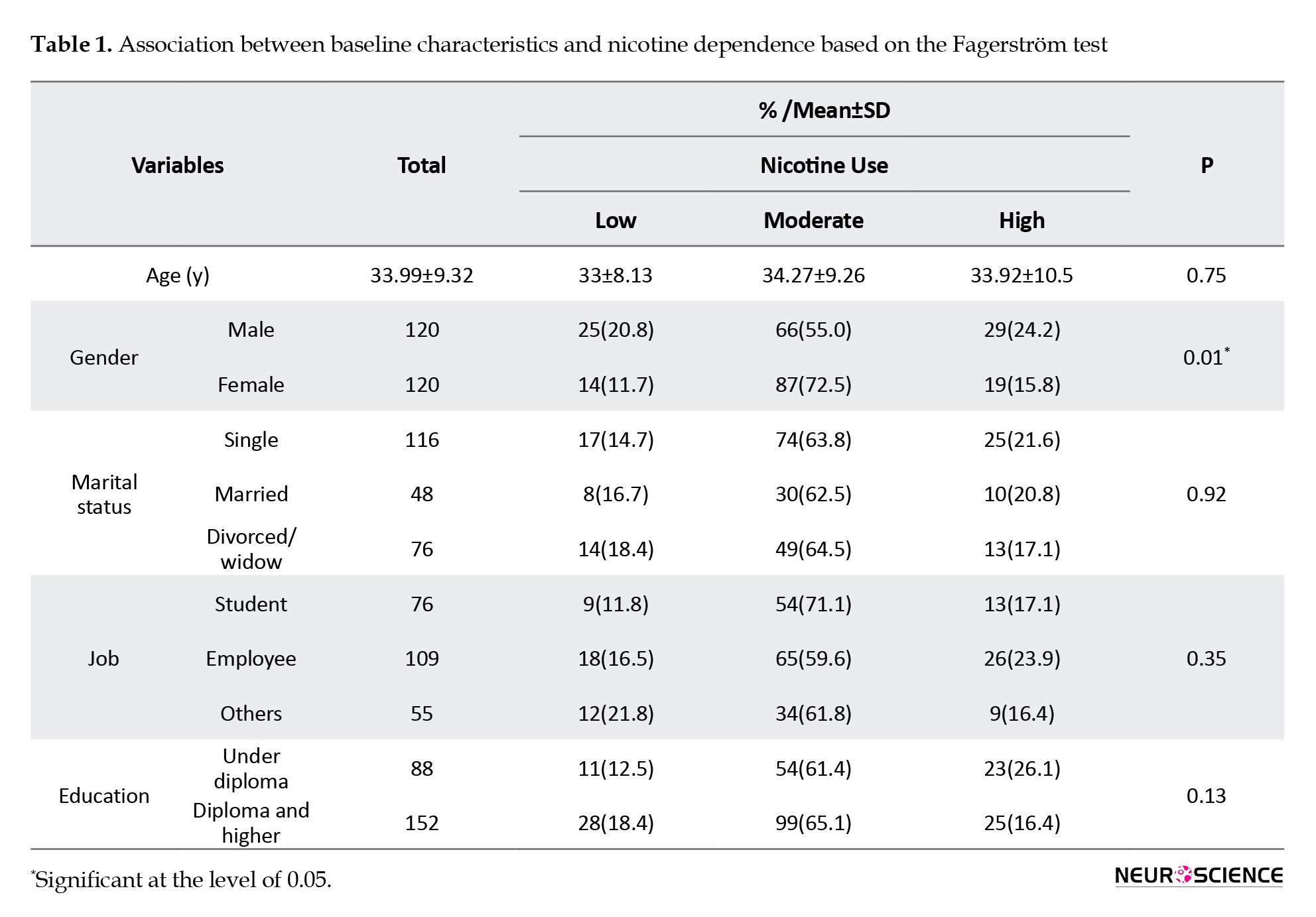
The chi-square test revealed a statistically significant association between gender and nicotine dependence level (P<0.05). However, no significant associations were observed between nicotine dependence levels and other demographic variables (P>0.05). Descriptive statistics for craving responses across the different CICT-34 image categories are presented in Table 2.
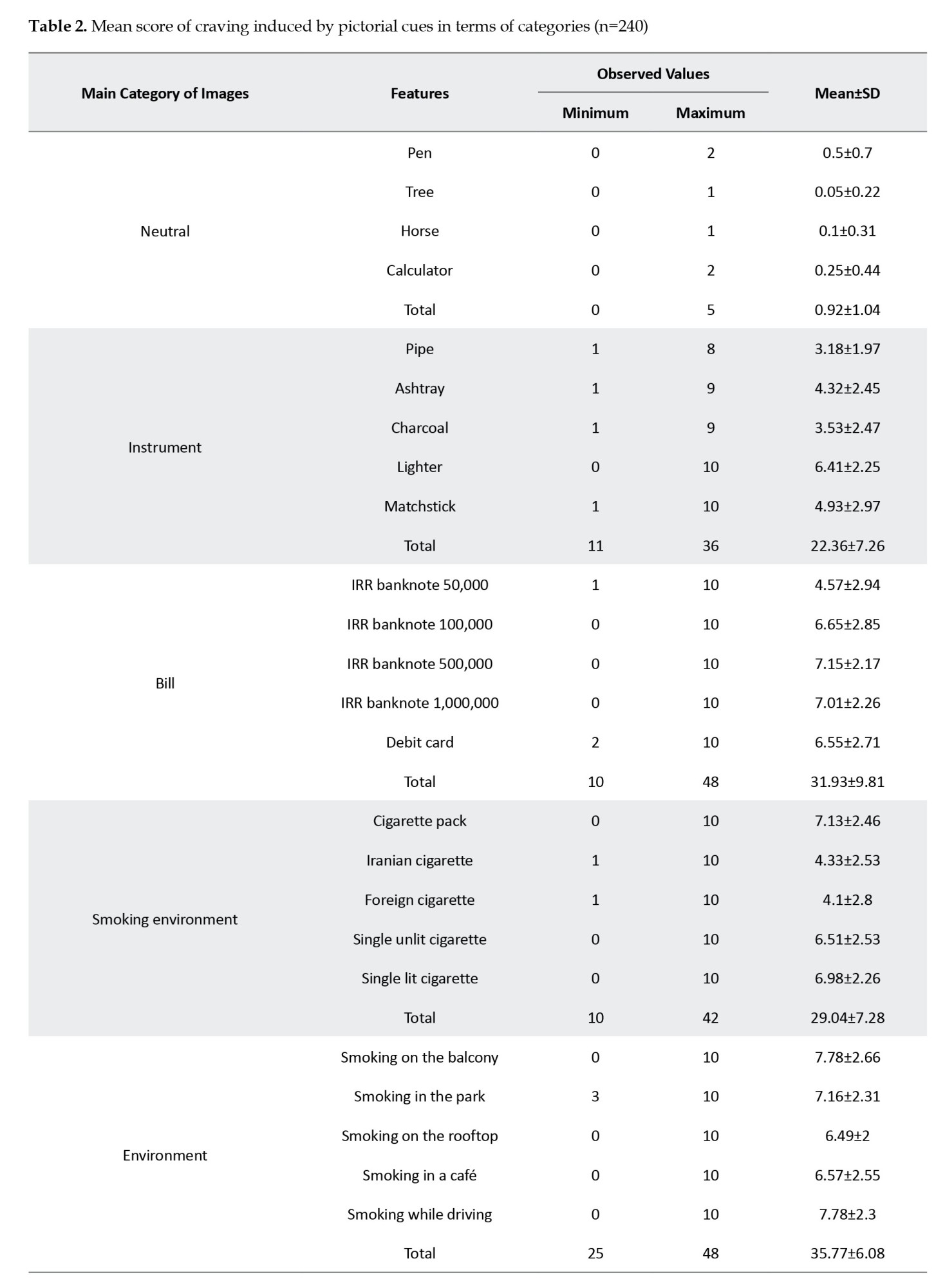
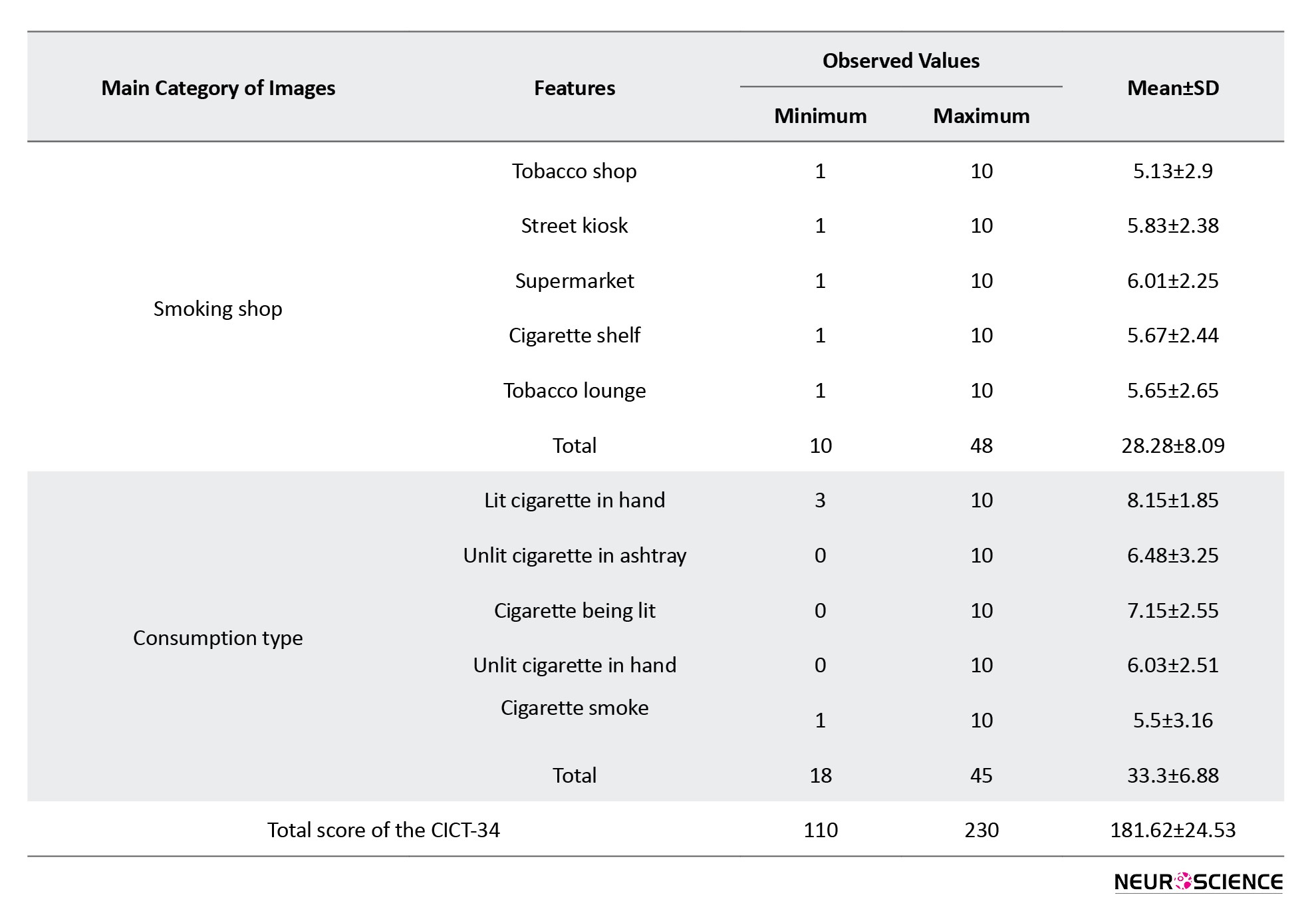
The mean total score of the CICT-34 was 181.62±24.53 (range: 110–230). As anticipated, neutral images elicited the lowest craving scores, whereas categories, such as smoking environment, bill, and consumption type evoked the highest craving responses.
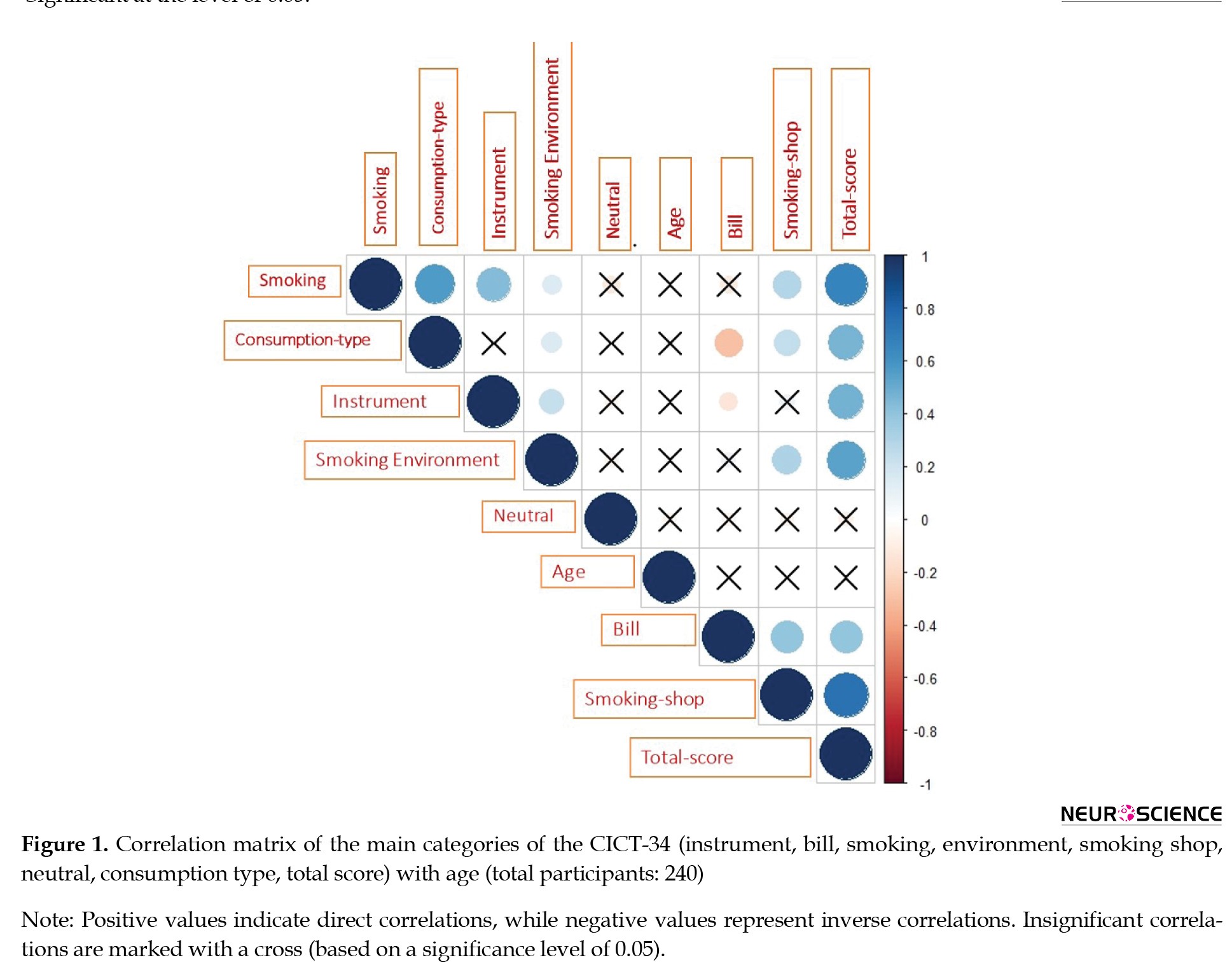
The correlations between participant age and craving scores across the CICT-34 categories are illustrated in Figure 1. No significant correlations were observed between age and craving scores for any category (P>0.05). In contrast, strong and statistically significant intercorrelations were identified among several CICT-34 categories (P<0.05). For example, the total CICT-34 score was significantly correlated with the smoking, consumption type, instrument, environment, bill, and smoking shop categories. Additionally, the smoking shop category was significantly correlated with smoking, consumption type, bill, and environment cues. These findings highlight the interconnected nature of craving-inducing visual stimuli.
Craving scores stratified by nicotine dependence level are reported in Table 3.
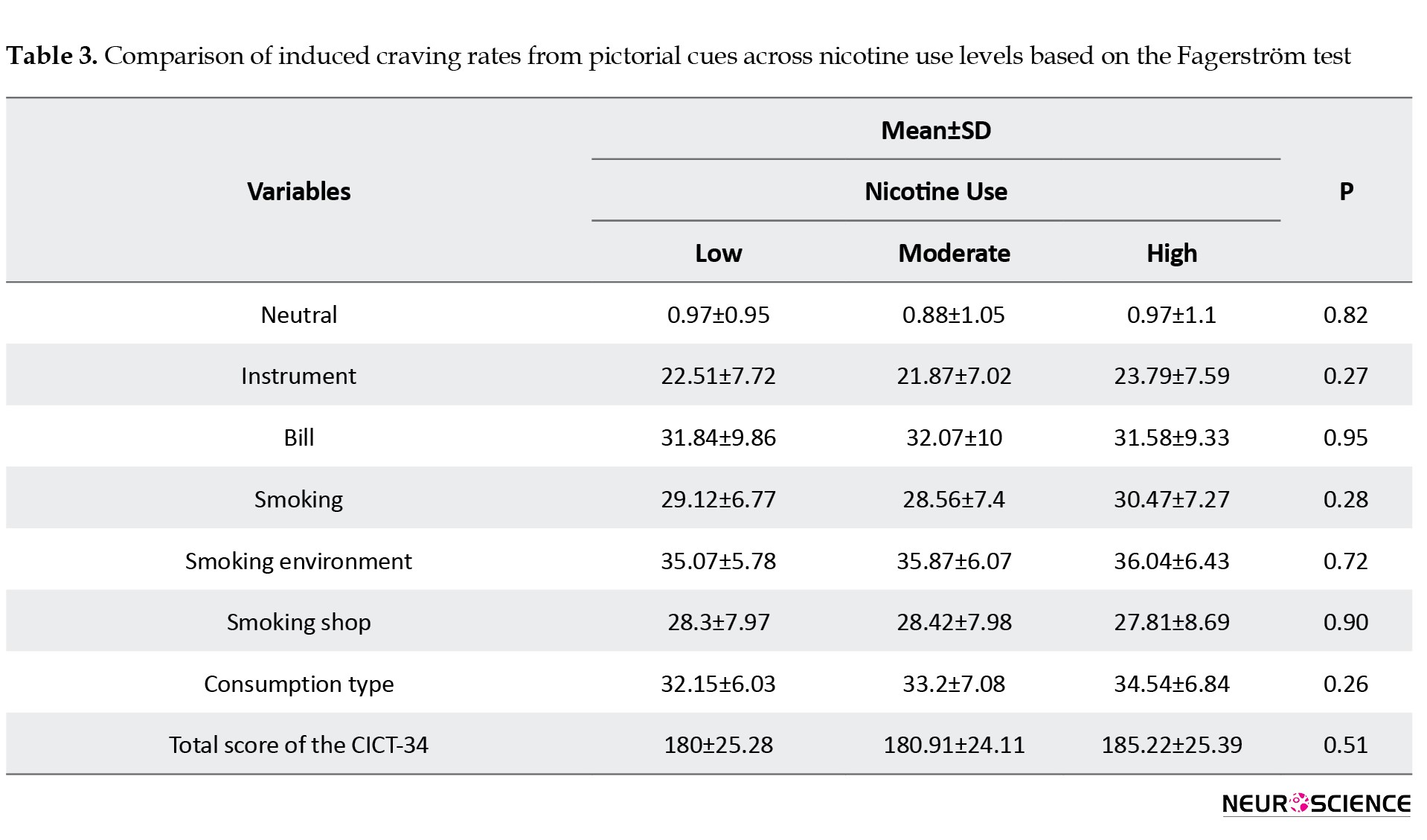
Although participants with higher nicotine dependence generally reported greater craving responses across most cue categories and for the total CICT-34 score, the Kruskal–Wallis test indicated no statistically significant differences between low-, moderate-, and high-dependence groups (P>0.05). Further subgroup analyses revealed gender- and education-specific differences in craving scores (Table 4).
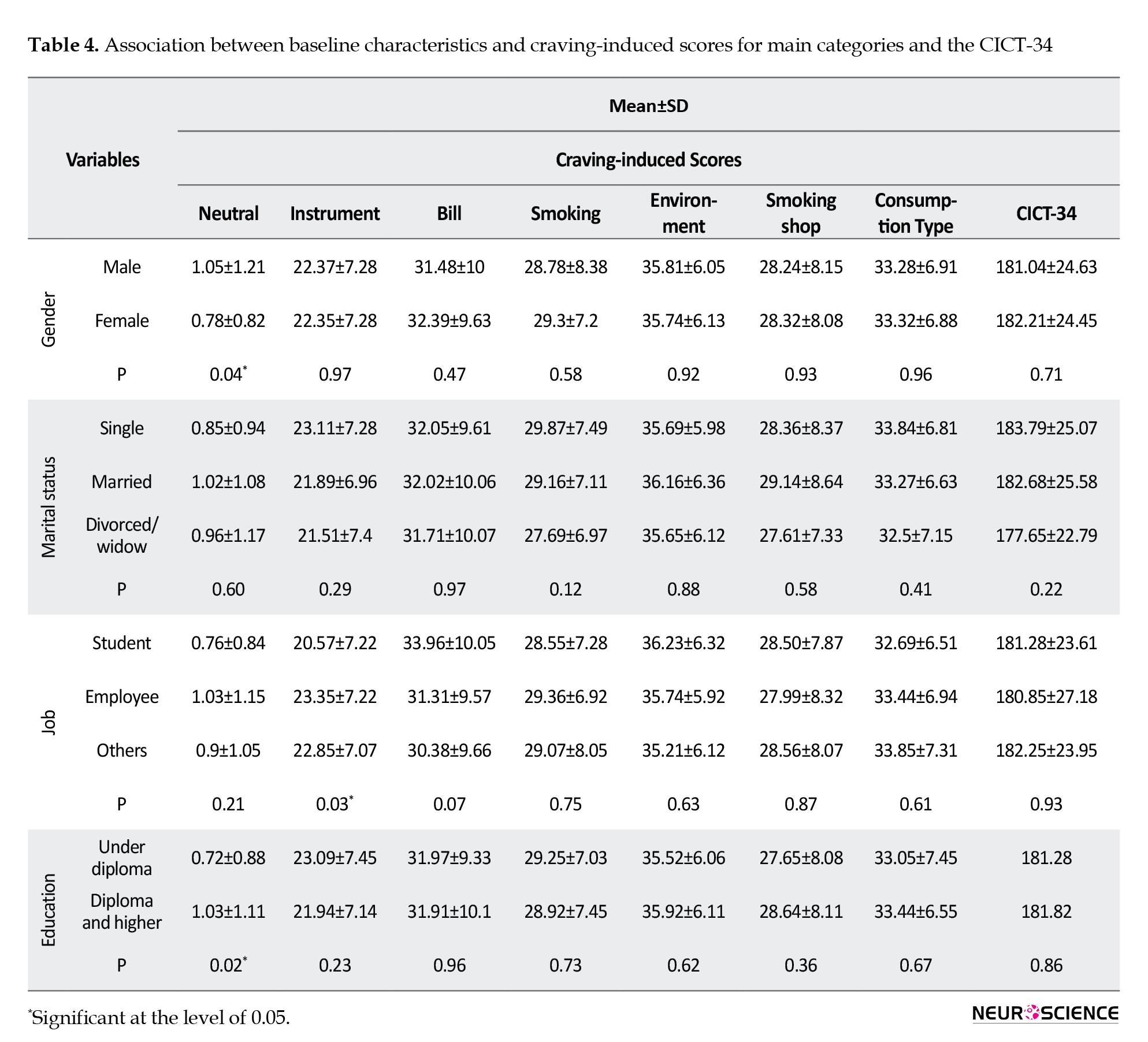
Males reported significantly higher craving responses to neutral images compared to females (P<0.05). Moreover, craving responses to neutral cues differed significantly across educational levels (P<0.05). In addition, participants reported the highest craving scores in the instrument category, and this difference reached statistical significance (P<0.05). No other significant associations were observed between craving levels and demographic variables across the remaining image categories (P>0.05).
Finally, the distribution of baseline characteristics and nicotine use variables by CICT-34 positiveness (defined as a total score above the median) is shown in Table 5.
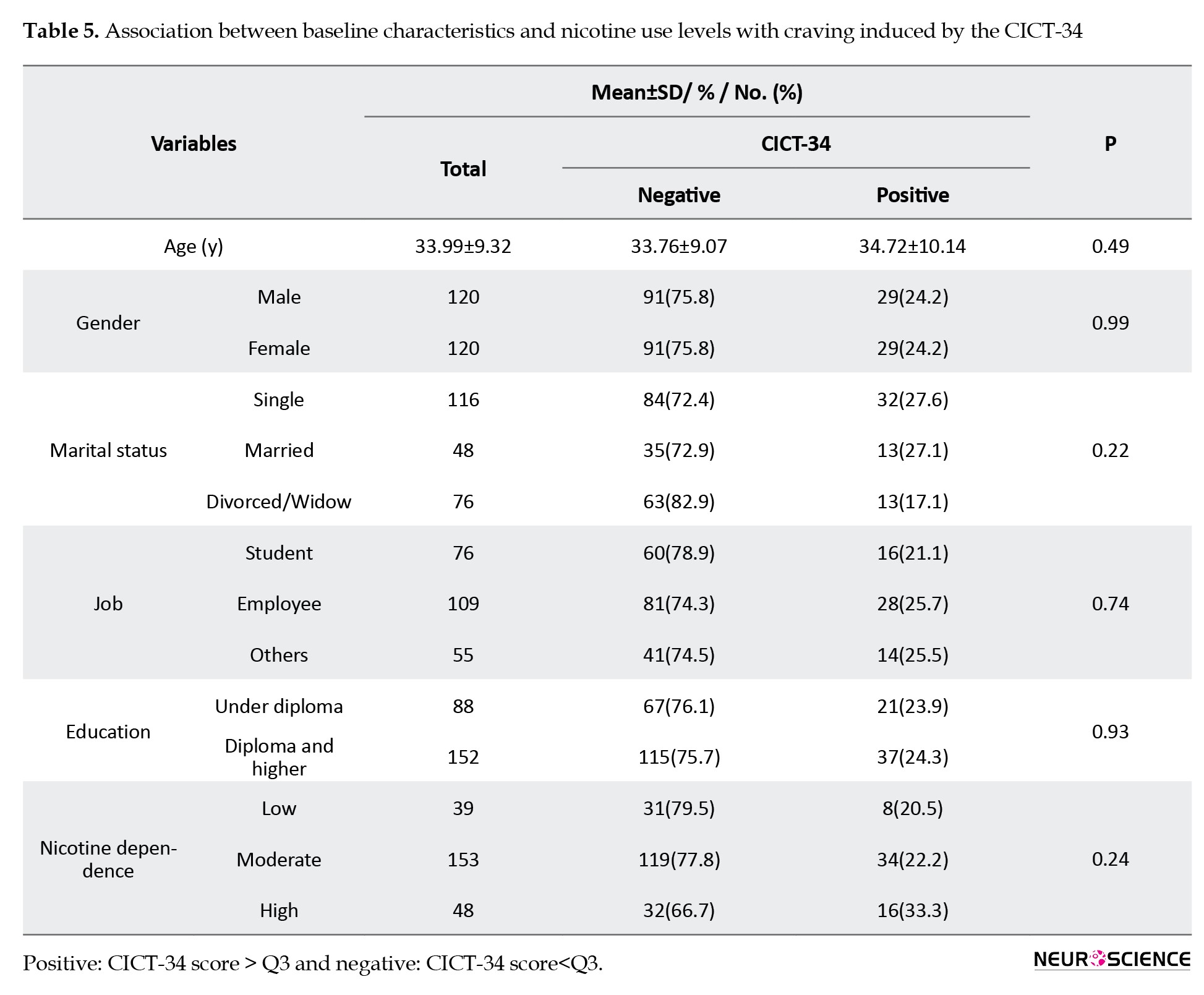
Independent samples t-tests demonstrated no significant association between age and CICT-34 positiveness (P>0.05). Similarly, chi-square tests revealed no significant associations between CICT-34 positiveness and demographic or nicotine use variables (P>0.05).
Discussion
This study investigated the influence of smoking-related visual cues (e.g. paraphernalia, smoking environments) on craving levels among smokers. Building on prior cue-reactivity paradigms which have shown that smoking-related images elicit greater subjective craving than neutral stimuli, we developed and validated a visual CICT-34 tailored to nicotine dependence. Similar to findings from methamphetamine research, our task reliably induced craving, thereby capturing the multidimensional nature of this phenomenon and supporting its utility in future cue-reactivity studies. Importantly, although existing research has confirmed that smoking imagery provokes craving, no previous study has systematically examined the role of isolated smoking-related cues (e.g. paraphernalia) in controlled settings. Our approach addresses this gap by offering a standardized tool to examine craving induction mechanisms in tobacco addiction.
Cigarette smoking, like other addictive behaviors, disrupts the brain’s reward circuitry through dopaminergic activation in key regions, reinforcing pleasurable sensations and promoting dependence. Craving, a central feature of addiction, is an affective–cognitive state characterized by both psychological and somatic symptoms, accompanied by an intense urge to consume nicotine (Dani et al., 2011). This urge is shaped by two key dimensions: baseline craving (a tonic, ongoing desire) and cue-induced craving (a phasic, stimulus-triggered response). The latter is strongly implicated in relapse vulnerability and cue-related reinstatement (Gheibi et al., 2025; Nazari et al., 2025b). Given this role of cue-induced craving in maintaining smoking behavior, recent evidence suggests that DLPFC-targeted tDCS may represent a promising approach for modulating cigarette craving in smokers (Niknamfar et al., 2025).
The latter is particularly significant clinically, as it is strongly implicated in relapse. Notably, individuals with higher baseline craving are more susceptible to cue reactivity, particularly to visual cues, which are among the most potent triggers due to their grounding in associative learning mechanisms (Vafaie & Kober, 2022). These cues act as conditioned stimuli, intensifying attentional bias toward smoking-related information, perpetuating dependence, and undermining cessation efforts. Given the serious health risks of nicotine addiction including cancer and cardiovascular disease addressing both tonic and phasic craving is essential for advancing treatment strategies. Laboratory-based paradigms employing standardized visual cues may therefore provide critical translational insights for intervention development (Chanon et al., 2010; Creswell & Skrzynski, 2021; Tong et al., 2007).
The present findings confirm that cue-elicited craving can be effectively induced in nicotine-dependent individuals through smoking-related visual stimuli. Psychometric analyses demonstrated that the CICT-34 possesses acceptable internal consistency, as evidenced by Cronbach’s α and McDonald’s omega values. VAS results indicated that pictorial cues depicting smoking environments, financial transactions, and consumption methods elicited the strongest craving responses. These outcomes are consistent with established empirical evidence on the role of environmental and contextual cues in addiction-related craving (Bonson et al., 2002; Newton et al., 2006; See, 2002; Tolliver et al., 2010).
Interestingly, while significant associations emerged between craving intensity and smoking-related variables (e.g. smoking status, consumption type, paraphernalia use, environmental contexts, financial cues, and tobacco shop imagery), no correlations were found with demographic factors, such as age, education, marital status, or employment. The chi-square test identified only a significant relationship between gender and nicotine dependence level. This pattern mirrors findings by Tolliver et al. (2010) in methamphetamine craving, where demographic influences were minimal. Together, these results reinforce the CICT-34’s reliability and confirm its value as a standardized tool for craving assessment in tobacco research.
Contradictory evidence exists regarding the role of demographic variables in craving. Some studies have reported associations between craving intensity and factors, such as age, smoking duration, education level, and cigarette expenditure, whereas others—similar to our results—have not found such correlations. This inconsistency parallels findings in heroin use research (Ekhtiari et al., 2006).
In addition, prior studies have documented strong relationships between nicotine dependence severity, as measured by the FTND, and craving intensity (Donny et al., 2008; Heatherton et al., 1991). Although our study did not find statistically significant correlations between dependence scores and craving responses, observed trends suggest a potential positive relationship that warrants further exploration. It should be mentioned that the participants abstained from smoking for at least two hours prior to testing, with sessions conducted in the morning to minimize variability in craving. While this controlled for recent nicotine intake, other factors, such as stress and sleep quality were not measured, constituting a study limitation.
This work contributes a validated set of ecologically relevant smoking-related cues, confirming their efficacy in reliably eliciting craving among smokers. While environments and paraphernalia emerged as particularly potent triggers, individual variability in cue responsiveness was evident, with some participants displaying attenuated responses. Such variability may reflect cognitive–motivational differences in cue processing (Avants et al., 1995). Our findings further support the use of cue-induced craving as a potential predictor of treatment outcomes, though post-exposure interventions are required to mitigate transient craving elevations.
The reduced craving induction observed in some participants may be explained by methodological and perceptual factors. Compared to dynamic stimuli (e.g. films), our static images likely elicited lower salience, consistent with evidence that moving cues evoke stronger reactivity. Moreover, narrative engagement during experimental tasks may have diverted attention away from subtler embedded cues. Individual differences in cue reactivity, as well as desensitization among daily smokers, may also have contributed to the attenuated effects. These considerations highlight the importance of stimulus characteristics (e.g. modality, intensity) and participant-related factors in the design of craving paradigms.
Craving responses are dynamic, typically peaking rapidly upon cue exposure before declining when cigarettes are unavailable. At the same time, image-based cues may influence behavior implicitly through automatic processes (Mogg et al., 2003; Unrod et al., 2014). Although our paradigm demonstrated high reliability among Iranian smokers, certain limitations must be acknowledged. These include reliance on self-report measures (despite interviewer training), unverified construct validity, and a sample skewed toward light smokers (60% smoked 1–10 cigarettes per day). Future studies should incorporate multimodal assessments—such as eye-tracking, Stroop or dot-probe tasks, and neuroimaging techniques (functional MRI (fMRI), repetitive transcranial magnetic stimulation (rTMS), and transcranial direct current stimulation (tDCS))—to provide convergent evidence and elucidate underlying neurocircuitry. Such approaches would strengthen ecological validity while leveraging potent visual stimuli for both research and clinical applications.
Several methodological challenges also arose. Recruitment of eligible participants was particularly difficult, necessitating collaboration with mental health clinics. Electroencephalography (EEG) data collection was complicated by environmental noise, which required acoustically shielded rooms. Maintaining engagement during extended sessions proved critical, and strategies, such as transparent communication of study benefits, small non-monetary incentives, and flexible scheduling were employed. Additionally, the use of tDCS, though generally well tolerated, was occasionally associated with side effects (e.g. tingling, itching, drowsiness), which could be exacerbated by electrode misplacement. While these issues were managed through methodological rigor and participant-centered adjustments, they underscore the importance of careful design in neurocognitive addiction research.
Conclusion
This study demonstrates that standardized visual cues (e.g. smoking environments, paraphernalia) reliably induce craving in nicotine-dependent individuals, with cue reactivity varying according to dependence severity but not demographic characteristics. While static images proved ecologically valid, their efficacy was moderated by individual differences in cue processing and by stimulus salience. The validated CICT-34 offers a robust framework for craving assessment in tobacco research. Future studies should integrate neuroimaging and real-time cognitive measures to further elucidate craving neurocircuitry. Ultimately, these findings highlight the importance of personalized interventions targeting both tonic and phasic craving in the treatment of tobacco addiction.
Ethical Considerations
Compliance with ethical guidelines
This study was approved by the Research Ethics Committee of Mazandaran University of Medical Sciences, Sari, Iran (Code: IR.MAZUMS.REC.1402.473).
Funding
This work was financially supported by the Mazandaran University of Medical Sciences, Sari, Iran (Grant No.: 18466).
Authors' contributions
Conceptualization, study design and methodology: Hamed Ghazvini and Azarakhsh Mokri; Experiments: Saba Niknamfar; Data interpretation: Raheleh Rafaiee, Seyed Hamzeh Hosseini, and Eisa Nazar; Writing the original draft: Seyedeh Masoumeh Seyedhosseini Tamijani; Review and editing: All authors.
Conflict of interest
The authors declared no conflict of interest.
Acknowledgments
The authors would like to thank all participants and staff involved in the study.
References
Avants, S. K., Margolin, A., Kosten, T. R., & Cooney, N. L. (1995). Differences between responders and nonresponders to cocaine cues in the laboratory. Addictive Behaviors, 20(2), 215-224. [DOI:10.1016/0306-4603(94)00066-2] [PMID]
Bonson, K. R., Grant, S. J., Contoreggi, C. S., Links, J. M., Metcalfe, J., & Weyl, H. L., et al. (2002). Neural systems and cue-induced cocaine craving. Neuropsychopharmacology: Official Publication of the American College of Neuropsychopharmacology, 26(3), 376–386. [DOI:10.1016/S0893-133X(01)00371-2] [PMID]
Chanon, V. W., Sours, C. R., & Boettiger, C. A. (2010). Attentional bias toward cigarette cues in active smokers. Psychopharmacology (Berl), 212(3), 309-320. [DOI:10.1007/s00213-010-1953-1] [PMID]
Creswell, K. G., & Skrzynski, C. J. (2021). The influence of smoking motivation on the associations among cigarette craving, attentional bias to smoking cues, and smoking behavior. Nicotine & Tobacco Research: Official Journal of the Society for Research on Nicotine and Tobacco, 23(10), 1727–1734. [DOI:10.1093/ntr/ntab028] [PMID]
Dani, J. A., Jenson, D., Broussard, J. I., & De Biasi, M. (2011). Neurophysiology of nicotine addiction. Journal of Addiction Research & Therapy, S1(1), 001. [DOI:10.4172/2155-6105.s1-001] [PMID]
Donny, E. C., Griffin, K. M., Shiffman, S., & Sayette, M. A. (2008). The relationship between cigarette use, nicotine dependence, and craving in laboratory volunteers. Nicotine & Tobacco Research: Official Journal of The Society for Research on Nicotine and Tobacco, 10(5), 934–942. [DOI:10.1080/14622200802133681] [PMID]
Ekhtiari, H., Behzadi, A., Oghabian, M., Edalati, H., & Mokri, A. (2006). Evaluation of visual cues inducing drug craving in intravenous heroin users. Advances in Cognitive Science, 8(3), 43–51. [Link]
Gheibi, M., Nazari, S., Mohseni, F., Sangani, P. S., Felehkari, F., & Niknamfar, S., et al. (2025). Coenzyme Q10 ameliorates anxiety and depressionlike behavior associated with chronic opioid use and increases GDNF expression in the hippocampus of morphinedependent rats. Acta Neurobiologiae Experimentalis, 85(2), 94-104. [DOI:10.55782/ane-2025-2581] [PMID]
Grodin, E. N., Courtney, K. E., & Ray, L. A. (2019). Drug-induced craving for methamphetamine is associated with neural methamphetamine cue reactivity. Journal of Studies on Alcohol and Drugs, 80(2), 245–251. [DOI:10.15288/jsad.2019.80.245] [PMID]
Heatherton, T. F., Kozlowski, L. T., Frecker, R. C., & Fagerstrom, K. O. (1991). The Fagerström test for nicotine dependence: a revision of the Fagerstrom Tolerance Questionnaire. British Journal of Addiction, 86(9), 1119-1127. [DOI:10.1111/j.1360-0443.1991.tb01879.x] [PMID]
Lin, Q., Li, D., Hu, C., Shen, Z., & Wang, Y. (2022). Altered EEG microstates dynamics during cue-induced methamphetamine craving in virtual reality environments. Frontiers in Psychiatry, 13, 891719. [DOI:10.3389/fpsyt.2022.891719] [PMID]
Mogg, K., Bradley, B. P., Field, M., & De Houwer, J. (2003). Eye movements to smoking-related pictures in smokers: relationship between attentional biases and implicit and explicit measures of stimulus valence. Addiction, 98(6), 825-836. [DOI:10.1046/j.1360-0443.2003.00392.x] [PMID]
Nazari, S., Gheibi, M., Salehi Sangani, P., Felehkari, F., Gohardehi, F., & Niknamfar, S., et al. (2025). Coenzyme Q10 suppression of cue-related reinstatement through cognition improvement and hippocampal increase in BDNF expression in morphine-dependent male rats. Basic and Clinical Neuroscience, 16(2), 379-392. [DOI:10.32598/bcn.2024.1425.7]
Nazari, S., Niknamfar, S., Ghazvini, H., Rafaiee, R., Allahverdy, A., & Khazaie, H., et al. (2025). Transcutaneous auricular vagus nerve stimulation restores cognitive impairment in morphine‐withdrawn rats: Role of BDNF and glial cells in the hippocampus. Addiction Biology, 30(4), e70016. [DOI:10.1111/adb.70016] [PMID]
Newton, T. F., Roache, J. D., De La Garza, R., Fong, T., Wallace, C. L., & Li, S. H., et al. (2006). Bupropion reduces methamphetamine-induced subjective effects and cue-induced craving. Neuropsychopharmacology, 31(7), 1537-1544. [DOI:10.1038/sj.npp.1300979] [PMID]
Niknamfar S, Alaedini K, Mokri A, Nazar E, Rafaiee R, Seyedhosseini Tamijani S M, et al. (2025). tDCS targeting the DLPFC for reducing cigarette craving and risky decision making. BCN; 16(5), 857-868. [DOI: 10.32598/bcn.2025.2297.4]
WHO. (2024). WHO global report on trends in prevalence of tobacco use 2000-2030. Geneva: WHO. [Link]
Reid, M. S., Mickalian, J. D., Delucchi, K. L., Hall, S. M., & Berger, S. P. (1998). An acute dose of nicotine enhances cue-induced cocaine craving. Drug and Alcohol Dependence, 49(2), 95–104. [DOI:10.1016/s0376-8716(97)00144-0] [PMID]
Robabeh, S., Jalali, M., Khesht Masjedi, M., & Amir, Z. (2017). Psychometric Properties of the Persian version of the Fagerstrom test for nicotine dependence in patients with opioid use disorder / cigarette smokers under methadone maintenance treatment. NeuroQuantology, 15, 253-260. [DOI:10.14704/nq.2017.15.2.1070]
Sandip Kumar Sinha, Ranabir Pal, Amrita Ghosh, & Rana, R. K. (2024). Tobacco & public health: Tobacco and community well-being: A worldwide health crisis. Chhattisgarh: Shashwat Publication. [Link]
See, R. E. (2002). Neural substrates of conditioned-cued relapse to drug-seeking behavior. Pharmacology Biochemistry and Behavior, 71(3), 517-529. [DOI:10.1016/S0091-3057(01)00682-7] [PMID]
Shmulewitz, D., Stohl, M., Greenstein, E., Roncone, S., Walsh, C., & Aharonovich, E., et al. (2023). Validity of the DSM-5 craving criterion for alcohol, tobacco, cannabis, cocaine, heroin, and non-prescription use of prescription painkillers (opioids). Psychological Medicine, 53(5), 1955-1969. [DOI:10.1017/S0033291721003652] [PMID]
Tauras, J. A. (2024). Tobacco control in low-income and middle-income countries: Findings from WHO FCTC investment cases. Tobacco Control, 33(Suppl 1), s1–s2. [DOI:10.1136/tc-2024-058717] [PMID]
Tolliver, B. K., McRae-Clark, A. L., Saladin, M., Price, K. L., Simpson, A. N., & DeSantis, S. M., et al. (2010). Determinants of cue-elicited craving and physiologic reactivity in methamphetamine-dependent subjects in the laboratory. The American Journal of Drug and Alcohol Abuse, 36(2), 106-113. [DOI:10.3109/00952991003686402] [PMID]
Tong, C., Bovbjerg, D. H., & Erblich, J. (2007). Smoking-related videos for use in cue-induced craving paradigms. Addict Behav, 32(12), 3034-3044. [DOI:10.1016/j.addbeh.2007.07.010] [PMID]
Unrod, M., Drobes, D. J., Stasiewicz, P. R., Ditre, J. W., Heckman, B., & Miller, R. R., et al. (2014). Decline in cue-provoked craving during cue exposure therapy for smoking cessation. Nicotine & Tobacco Research: Official Journal of the Society for Research on Nicotine and Tobacco, 16(3), 306–315. [DOI:10.1093/ntr/ntt145] [PMID]
Vafaie, N., & Kober, H. (2022). Association of drug cues and craving with drug use and relapse: A systematic review and meta-analysis. JAMA Psychiatry, 79(7), 641-650. [DOI:10.1001/jamapsychiatry.2022.1240] [PMID]
Witteman, J., Post, H., Tarvainen, M., de Bruijn, A., Perna Ede, S., & Ramaekers, J. G., et al. (2015). Cue reactivity and its relation to craving and relapse in alcohol dependence: A combined laboratory and field study. Psychopharmacology (Berl), 232(20), 3685-3696. [DOI:10.1007/s00213-015-4027-6] [PMID]
2. Instrument (5 pictures)
3. Bill (5 pictures)
4. Smoking (5 pictures)
5. Smoking environment (5 pictures)
6. Smoking shop (5 pictures)
7. Consumption type (5 pictures)
It should be mentioned that in accordance with ethical guidelines for clinical research involving craving induction, all participants received structured post-task support. This included a brief counseling session focused on craving management techniques and relapse prevention strategies. Furthermore, participants had continued access to the standard support services provided by the treatment center, ensuring their well-being following the experimental procedure.
Statistical analysis
All statistical analyses were conducted using SPSS software, version 20, with the level of significance set at P<0.05. Descriptive statistics, including Mean±SD and frequency distributions (percentages), were calculated to summarize demographic characteristics and cue-induced craving task (CICT-34) scores.
The internal consistency of the CICT-34 was evaluated using Cronbach’s α and McDonald’s omega coefficients. Data normality was assessed using the Kolmogorov–Smirnov test. Based on the distribution of variables, between-group comparisons were performed using independent-samples t-tests for normally distributed data or Mann–Whitney U tests for non-normally distributed data. For comparisons across more than two groups, one-way analysis of variance was used for normally distributed variables, while the Kruskal–Wallis test was applied for non-normal data.
Associations between categorical variables were examined using chi-square tests or Fisher’s exact tests, as appropriate. To evaluate relationships between continuous demographic variables (e.g. age, education level, monthly income, sexual activity) and CICT-34 scores, Pearson correlation coefficients were calculated. For variables that did not meet normality assumptions, non-parametric correlation methods were employed.
Finally, additional t-tests and analysis of variance were conducted to explore the effects of living conditions, smoking patterns, and engagement in high-risk behaviors on craving intensity.
Results
A total of 240 participants who fulfilled the inclusion and exclusion criteria were enrolled in the study. The mean age of the sample was 33.99±9.32 years (range: 18–60 years). Of these, 120 participants (50%) were female, with a mean age of 34.16±9.28 years, and 120 participants (50%) were male, with a mean age of 33.83±9.4 years. There was no statistically significant difference between the mean age of male and female participants (P>0.05).
The internal consistency of the CICT-34 was assessed using Cronbach’s α and McDonald’s omega coefficients. Cronbach’s α was 0.701, while McDonald’s omega yielded a higher reliability estimate of 0.79. These findings indicate that the CICT-34 demonstrates good and acceptable internal consistency, with McDonald’s omega providing stronger evidence of reliability, particularly in contexts where the assumptions underlying Cronbach’s α may be violated. Thus, the CICT-34 can be considered a reliable measure for assessing craving elicited by smoking-related visual stimuli in nicotine-dependent individuals.
Baseline participant characteristics and nicotine dependence levels, as assessed by the FTND, are summarized in Table 1.
The chi-square test revealed a statistically significant association between gender and nicotine dependence level (P<0.05). However, no significant associations were observed between nicotine dependence levels and other demographic variables (P>0.05). Descriptive statistics for craving responses across the different CICT-34 image categories are presented in Table 2.
The mean total score of the CICT-34 was 181.62±24.53 (range: 110–230). As anticipated, neutral images elicited the lowest craving scores, whereas categories, such as smoking environment, bill, and consumption type evoked the highest craving responses.
The correlations between participant age and craving scores across the CICT-34 categories are illustrated in Figure 1. No significant correlations were observed between age and craving scores for any category (P>0.05). In contrast, strong and statistically significant intercorrelations were identified among several CICT-34 categories (P<0.05). For example, the total CICT-34 score was significantly correlated with the smoking, consumption type, instrument, environment, bill, and smoking shop categories. Additionally, the smoking shop category was significantly correlated with smoking, consumption type, bill, and environment cues. These findings highlight the interconnected nature of craving-inducing visual stimuli.
Craving scores stratified by nicotine dependence level are reported in Table 3.
Although participants with higher nicotine dependence generally reported greater craving responses across most cue categories and for the total CICT-34 score, the Kruskal–Wallis test indicated no statistically significant differences between low-, moderate-, and high-dependence groups (P>0.05). Further subgroup analyses revealed gender- and education-specific differences in craving scores (Table 4).
Males reported significantly higher craving responses to neutral images compared to females (P<0.05). Moreover, craving responses to neutral cues differed significantly across educational levels (P<0.05). In addition, participants reported the highest craving scores in the instrument category, and this difference reached statistical significance (P<0.05). No other significant associations were observed between craving levels and demographic variables across the remaining image categories (P>0.05).
Finally, the distribution of baseline characteristics and nicotine use variables by CICT-34 positiveness (defined as a total score above the median) is shown in Table 5.
Independent samples t-tests demonstrated no significant association between age and CICT-34 positiveness (P>0.05). Similarly, chi-square tests revealed no significant associations between CICT-34 positiveness and demographic or nicotine use variables (P>0.05).
Discussion
This study investigated the influence of smoking-related visual cues (e.g. paraphernalia, smoking environments) on craving levels among smokers. Building on prior cue-reactivity paradigms which have shown that smoking-related images elicit greater subjective craving than neutral stimuli, we developed and validated a visual CICT-34 tailored to nicotine dependence. Similar to findings from methamphetamine research, our task reliably induced craving, thereby capturing the multidimensional nature of this phenomenon and supporting its utility in future cue-reactivity studies. Importantly, although existing research has confirmed that smoking imagery provokes craving, no previous study has systematically examined the role of isolated smoking-related cues (e.g. paraphernalia) in controlled settings. Our approach addresses this gap by offering a standardized tool to examine craving induction mechanisms in tobacco addiction.
Cigarette smoking, like other addictive behaviors, disrupts the brain’s reward circuitry through dopaminergic activation in key regions, reinforcing pleasurable sensations and promoting dependence. Craving, a central feature of addiction, is an affective–cognitive state characterized by both psychological and somatic symptoms, accompanied by an intense urge to consume nicotine (Dani et al., 2011). This urge is shaped by two key dimensions: baseline craving (a tonic, ongoing desire) and cue-induced craving (a phasic, stimulus-triggered response). The latter is strongly implicated in relapse vulnerability and cue-related reinstatement (Gheibi et al., 2025; Nazari et al., 2025b). Given this role of cue-induced craving in maintaining smoking behavior, recent evidence suggests that DLPFC-targeted tDCS may represent a promising approach for modulating cigarette craving in smokers (Niknamfar et al., 2025).
The latter is particularly significant clinically, as it is strongly implicated in relapse. Notably, individuals with higher baseline craving are more susceptible to cue reactivity, particularly to visual cues, which are among the most potent triggers due to their grounding in associative learning mechanisms (Vafaie & Kober, 2022). These cues act as conditioned stimuli, intensifying attentional bias toward smoking-related information, perpetuating dependence, and undermining cessation efforts. Given the serious health risks of nicotine addiction including cancer and cardiovascular disease addressing both tonic and phasic craving is essential for advancing treatment strategies. Laboratory-based paradigms employing standardized visual cues may therefore provide critical translational insights for intervention development (Chanon et al., 2010; Creswell & Skrzynski, 2021; Tong et al., 2007).
The present findings confirm that cue-elicited craving can be effectively induced in nicotine-dependent individuals through smoking-related visual stimuli. Psychometric analyses demonstrated that the CICT-34 possesses acceptable internal consistency, as evidenced by Cronbach’s α and McDonald’s omega values. VAS results indicated that pictorial cues depicting smoking environments, financial transactions, and consumption methods elicited the strongest craving responses. These outcomes are consistent with established empirical evidence on the role of environmental and contextual cues in addiction-related craving (Bonson et al., 2002; Newton et al., 2006; See, 2002; Tolliver et al., 2010).
Interestingly, while significant associations emerged between craving intensity and smoking-related variables (e.g. smoking status, consumption type, paraphernalia use, environmental contexts, financial cues, and tobacco shop imagery), no correlations were found with demographic factors, such as age, education, marital status, or employment. The chi-square test identified only a significant relationship between gender and nicotine dependence level. This pattern mirrors findings by Tolliver et al. (2010) in methamphetamine craving, where demographic influences were minimal. Together, these results reinforce the CICT-34’s reliability and confirm its value as a standardized tool for craving assessment in tobacco research.
Contradictory evidence exists regarding the role of demographic variables in craving. Some studies have reported associations between craving intensity and factors, such as age, smoking duration, education level, and cigarette expenditure, whereas others—similar to our results—have not found such correlations. This inconsistency parallels findings in heroin use research (Ekhtiari et al., 2006).
In addition, prior studies have documented strong relationships between nicotine dependence severity, as measured by the FTND, and craving intensity (Donny et al., 2008; Heatherton et al., 1991). Although our study did not find statistically significant correlations between dependence scores and craving responses, observed trends suggest a potential positive relationship that warrants further exploration. It should be mentioned that the participants abstained from smoking for at least two hours prior to testing, with sessions conducted in the morning to minimize variability in craving. While this controlled for recent nicotine intake, other factors, such as stress and sleep quality were not measured, constituting a study limitation.
This work contributes a validated set of ecologically relevant smoking-related cues, confirming their efficacy in reliably eliciting craving among smokers. While environments and paraphernalia emerged as particularly potent triggers, individual variability in cue responsiveness was evident, with some participants displaying attenuated responses. Such variability may reflect cognitive–motivational differences in cue processing (Avants et al., 1995). Our findings further support the use of cue-induced craving as a potential predictor of treatment outcomes, though post-exposure interventions are required to mitigate transient craving elevations.
The reduced craving induction observed in some participants may be explained by methodological and perceptual factors. Compared to dynamic stimuli (e.g. films), our static images likely elicited lower salience, consistent with evidence that moving cues evoke stronger reactivity. Moreover, narrative engagement during experimental tasks may have diverted attention away from subtler embedded cues. Individual differences in cue reactivity, as well as desensitization among daily smokers, may also have contributed to the attenuated effects. These considerations highlight the importance of stimulus characteristics (e.g. modality, intensity) and participant-related factors in the design of craving paradigms.
Craving responses are dynamic, typically peaking rapidly upon cue exposure before declining when cigarettes are unavailable. At the same time, image-based cues may influence behavior implicitly through automatic processes (Mogg et al., 2003; Unrod et al., 2014). Although our paradigm demonstrated high reliability among Iranian smokers, certain limitations must be acknowledged. These include reliance on self-report measures (despite interviewer training), unverified construct validity, and a sample skewed toward light smokers (60% smoked 1–10 cigarettes per day). Future studies should incorporate multimodal assessments—such as eye-tracking, Stroop or dot-probe tasks, and neuroimaging techniques (functional MRI (fMRI), repetitive transcranial magnetic stimulation (rTMS), and transcranial direct current stimulation (tDCS))—to provide convergent evidence and elucidate underlying neurocircuitry. Such approaches would strengthen ecological validity while leveraging potent visual stimuli for both research and clinical applications.
Several methodological challenges also arose. Recruitment of eligible participants was particularly difficult, necessitating collaboration with mental health clinics. Electroencephalography (EEG) data collection was complicated by environmental noise, which required acoustically shielded rooms. Maintaining engagement during extended sessions proved critical, and strategies, such as transparent communication of study benefits, small non-monetary incentives, and flexible scheduling were employed. Additionally, the use of tDCS, though generally well tolerated, was occasionally associated with side effects (e.g. tingling, itching, drowsiness), which could be exacerbated by electrode misplacement. While these issues were managed through methodological rigor and participant-centered adjustments, they underscore the importance of careful design in neurocognitive addiction research.
Conclusion
This study demonstrates that standardized visual cues (e.g. smoking environments, paraphernalia) reliably induce craving in nicotine-dependent individuals, with cue reactivity varying according to dependence severity but not demographic characteristics. While static images proved ecologically valid, their efficacy was moderated by individual differences in cue processing and by stimulus salience. The validated CICT-34 offers a robust framework for craving assessment in tobacco research. Future studies should integrate neuroimaging and real-time cognitive measures to further elucidate craving neurocircuitry. Ultimately, these findings highlight the importance of personalized interventions targeting both tonic and phasic craving in the treatment of tobacco addiction.
Ethical Considerations
Compliance with ethical guidelines
This study was approved by the Research Ethics Committee of Mazandaran University of Medical Sciences, Sari, Iran (Code: IR.MAZUMS.REC.1402.473).
Funding
This work was financially supported by the Mazandaran University of Medical Sciences, Sari, Iran (Grant No.: 18466).
Authors' contributions
Conceptualization, study design and methodology: Hamed Ghazvini and Azarakhsh Mokri; Experiments: Saba Niknamfar; Data interpretation: Raheleh Rafaiee, Seyed Hamzeh Hosseini, and Eisa Nazar; Writing the original draft: Seyedeh Masoumeh Seyedhosseini Tamijani; Review and editing: All authors.
Conflict of interest
The authors declared no conflict of interest.
Acknowledgments
The authors would like to thank all participants and staff involved in the study.
References
Avants, S. K., Margolin, A., Kosten, T. R., & Cooney, N. L. (1995). Differences between responders and nonresponders to cocaine cues in the laboratory. Addictive Behaviors, 20(2), 215-224. [DOI:10.1016/0306-4603(94)00066-2] [PMID]
Bonson, K. R., Grant, S. J., Contoreggi, C. S., Links, J. M., Metcalfe, J., & Weyl, H. L., et al. (2002). Neural systems and cue-induced cocaine craving. Neuropsychopharmacology: Official Publication of the American College of Neuropsychopharmacology, 26(3), 376–386. [DOI:10.1016/S0893-133X(01)00371-2] [PMID]
Chanon, V. W., Sours, C. R., & Boettiger, C. A. (2010). Attentional bias toward cigarette cues in active smokers. Psychopharmacology (Berl), 212(3), 309-320. [DOI:10.1007/s00213-010-1953-1] [PMID]
Creswell, K. G., & Skrzynski, C. J. (2021). The influence of smoking motivation on the associations among cigarette craving, attentional bias to smoking cues, and smoking behavior. Nicotine & Tobacco Research: Official Journal of the Society for Research on Nicotine and Tobacco, 23(10), 1727–1734. [DOI:10.1093/ntr/ntab028] [PMID]
Dani, J. A., Jenson, D., Broussard, J. I., & De Biasi, M. (2011). Neurophysiology of nicotine addiction. Journal of Addiction Research & Therapy, S1(1), 001. [DOI:10.4172/2155-6105.s1-001] [PMID]
Donny, E. C., Griffin, K. M., Shiffman, S., & Sayette, M. A. (2008). The relationship between cigarette use, nicotine dependence, and craving in laboratory volunteers. Nicotine & Tobacco Research: Official Journal of The Society for Research on Nicotine and Tobacco, 10(5), 934–942. [DOI:10.1080/14622200802133681] [PMID]
Ekhtiari, H., Behzadi, A., Oghabian, M., Edalati, H., & Mokri, A. (2006). Evaluation of visual cues inducing drug craving in intravenous heroin users. Advances in Cognitive Science, 8(3), 43–51. [Link]
Gheibi, M., Nazari, S., Mohseni, F., Sangani, P. S., Felehkari, F., & Niknamfar, S., et al. (2025). Coenzyme Q10 ameliorates anxiety and depressionlike behavior associated with chronic opioid use and increases GDNF expression in the hippocampus of morphinedependent rats. Acta Neurobiologiae Experimentalis, 85(2), 94-104. [DOI:10.55782/ane-2025-2581] [PMID]
Grodin, E. N., Courtney, K. E., & Ray, L. A. (2019). Drug-induced craving for methamphetamine is associated with neural methamphetamine cue reactivity. Journal of Studies on Alcohol and Drugs, 80(2), 245–251. [DOI:10.15288/jsad.2019.80.245] [PMID]
Heatherton, T. F., Kozlowski, L. T., Frecker, R. C., & Fagerstrom, K. O. (1991). The Fagerström test for nicotine dependence: a revision of the Fagerstrom Tolerance Questionnaire. British Journal of Addiction, 86(9), 1119-1127. [DOI:10.1111/j.1360-0443.1991.tb01879.x] [PMID]
Lin, Q., Li, D., Hu, C., Shen, Z., & Wang, Y. (2022). Altered EEG microstates dynamics during cue-induced methamphetamine craving in virtual reality environments. Frontiers in Psychiatry, 13, 891719. [DOI:10.3389/fpsyt.2022.891719] [PMID]
Mogg, K., Bradley, B. P., Field, M., & De Houwer, J. (2003). Eye movements to smoking-related pictures in smokers: relationship between attentional biases and implicit and explicit measures of stimulus valence. Addiction, 98(6), 825-836. [DOI:10.1046/j.1360-0443.2003.00392.x] [PMID]
Nazari, S., Gheibi, M., Salehi Sangani, P., Felehkari, F., Gohardehi, F., & Niknamfar, S., et al. (2025). Coenzyme Q10 suppression of cue-related reinstatement through cognition improvement and hippocampal increase in BDNF expression in morphine-dependent male rats. Basic and Clinical Neuroscience, 16(2), 379-392. [DOI:10.32598/bcn.2024.1425.7]
Nazari, S., Niknamfar, S., Ghazvini, H., Rafaiee, R., Allahverdy, A., & Khazaie, H., et al. (2025). Transcutaneous auricular vagus nerve stimulation restores cognitive impairment in morphine‐withdrawn rats: Role of BDNF and glial cells in the hippocampus. Addiction Biology, 30(4), e70016. [DOI:10.1111/adb.70016] [PMID]
Newton, T. F., Roache, J. D., De La Garza, R., Fong, T., Wallace, C. L., & Li, S. H., et al. (2006). Bupropion reduces methamphetamine-induced subjective effects and cue-induced craving. Neuropsychopharmacology, 31(7), 1537-1544. [DOI:10.1038/sj.npp.1300979] [PMID]
Niknamfar S, Alaedini K, Mokri A, Nazar E, Rafaiee R, Seyedhosseini Tamijani S M, et al. (2025). tDCS targeting the DLPFC for reducing cigarette craving and risky decision making. BCN; 16(5), 857-868. [DOI: 10.32598/bcn.2025.2297.4]
WHO. (2024). WHO global report on trends in prevalence of tobacco use 2000-2030. Geneva: WHO. [Link]
Reid, M. S., Mickalian, J. D., Delucchi, K. L., Hall, S. M., & Berger, S. P. (1998). An acute dose of nicotine enhances cue-induced cocaine craving. Drug and Alcohol Dependence, 49(2), 95–104. [DOI:10.1016/s0376-8716(97)00144-0] [PMID]
Robabeh, S., Jalali, M., Khesht Masjedi, M., & Amir, Z. (2017). Psychometric Properties of the Persian version of the Fagerstrom test for nicotine dependence in patients with opioid use disorder / cigarette smokers under methadone maintenance treatment. NeuroQuantology, 15, 253-260. [DOI:10.14704/nq.2017.15.2.1070]
Sandip Kumar Sinha, Ranabir Pal, Amrita Ghosh, & Rana, R. K. (2024). Tobacco & public health: Tobacco and community well-being: A worldwide health crisis. Chhattisgarh: Shashwat Publication. [Link]
See, R. E. (2002). Neural substrates of conditioned-cued relapse to drug-seeking behavior. Pharmacology Biochemistry and Behavior, 71(3), 517-529. [DOI:10.1016/S0091-3057(01)00682-7] [PMID]
Shmulewitz, D., Stohl, M., Greenstein, E., Roncone, S., Walsh, C., & Aharonovich, E., et al. (2023). Validity of the DSM-5 craving criterion for alcohol, tobacco, cannabis, cocaine, heroin, and non-prescription use of prescription painkillers (opioids). Psychological Medicine, 53(5), 1955-1969. [DOI:10.1017/S0033291721003652] [PMID]
Tauras, J. A. (2024). Tobacco control in low-income and middle-income countries: Findings from WHO FCTC investment cases. Tobacco Control, 33(Suppl 1), s1–s2. [DOI:10.1136/tc-2024-058717] [PMID]
Tolliver, B. K., McRae-Clark, A. L., Saladin, M., Price, K. L., Simpson, A. N., & DeSantis, S. M., et al. (2010). Determinants of cue-elicited craving and physiologic reactivity in methamphetamine-dependent subjects in the laboratory. The American Journal of Drug and Alcohol Abuse, 36(2), 106-113. [DOI:10.3109/00952991003686402] [PMID]
Tong, C., Bovbjerg, D. H., & Erblich, J. (2007). Smoking-related videos for use in cue-induced craving paradigms. Addict Behav, 32(12), 3034-3044. [DOI:10.1016/j.addbeh.2007.07.010] [PMID]
Unrod, M., Drobes, D. J., Stasiewicz, P. R., Ditre, J. W., Heckman, B., & Miller, R. R., et al. (2014). Decline in cue-provoked craving during cue exposure therapy for smoking cessation. Nicotine & Tobacco Research: Official Journal of the Society for Research on Nicotine and Tobacco, 16(3), 306–315. [DOI:10.1093/ntr/ntt145] [PMID]
Vafaie, N., & Kober, H. (2022). Association of drug cues and craving with drug use and relapse: A systematic review and meta-analysis. JAMA Psychiatry, 79(7), 641-650. [DOI:10.1001/jamapsychiatry.2022.1240] [PMID]
Witteman, J., Post, H., Tarvainen, M., de Bruijn, A., Perna Ede, S., & Ramaekers, J. G., et al. (2015). Cue reactivity and its relation to craving and relapse in alcohol dependence: A combined laboratory and field study. Psychopharmacology (Berl), 232(20), 3685-3696. [DOI:10.1007/s00213-015-4027-6] [PMID]
Type of Study: Original |
Subject:
Cognitive Neuroscience
Received: 2025/10/8 | Accepted: 2026/01/26 | Published: 2026/03/1
Received: 2025/10/8 | Accepted: 2026/01/26 | Published: 2026/03/1
Send email to the article author
| Rights and permissions | |
 |
This work is licensed under a Creative Commons Attribution-NonCommercial 4.0 International License. |

Copyright © The Author(s);
This is an open access article distributed under the terms of the Creative Commons Attribution License (CC-By-NC), which permits use, distribution, and reproduction in any medium, provided the original work is properly cited and is not used for commercial purposes.
Contact Information