

Volume 17, Issue 2 (March & April 2026)
BCN 2026, 17(2): 337-344 |
Back to browse issues page


Download citation:
BibTeX | RIS | EndNote | Medlars | ProCite | Reference Manager | RefWorks
Send citation to:


BibTeX | RIS | EndNote | Medlars | ProCite | Reference Manager | RefWorks
Send citation to:
Maniati M S, Khosrowabadi R, Shams J. Efficacy of Fluoxetine, Fluvoxamine, and Sertraline in Treating Anxiety, Depression, and Obsessive-compulsive Disorder. BCN 2026; 17 (2) :337-344
URL: http://bcn.iums.ac.ir/article-1-3249-en.html
URL: http://bcn.iums.ac.ir/article-1-3249-en.html


1- Neuroscience Research Center, Shahid Beheshti University of Medical Sciences, Tehran, Iran.
2- Institute for Cognitive and Brain Sciences, Shahid Beheshti University, Tehran, Iran.
3- Neuroscience Research Center, Shahid Beheshti University of Medical Sciences, Tehran, Iran. & Behavioral Sciences Research Center, Shahid Beheshti University of Medical Sciences, Tehran, Iran.
2- Institute for Cognitive and Brain Sciences, Shahid Beheshti University, Tehran, Iran.
3- Neuroscience Research Center, Shahid Beheshti University of Medical Sciences, Tehran, Iran. & Behavioral Sciences Research Center, Shahid Beheshti University of Medical Sciences, Tehran, Iran.
Keywords: Selective serotonin reuptake inhibitors (SSRIs), Fluoxetine, Obsessive-compulsive disorder (OCD), Fluvoxamine, Sertraline, Depression, Anxiety
Full-Text [PDF 741 kb]
| Abstract (HTML)
Full-Text:
Introduction
Anxiety disorders, major depressive disorder (MDD), and obsessive-compulsive disorder (OCD) are among the most prevalent and debilitating psychiatric disorders worldwide, imposing a significant burden on individuals and public health (Sharma et al., 2021). These disorders not only lead to considerable mental distress, functional impairment in various life domains, and reduced quality of life, but also increase the risk of other health problems. For example, they raise the risk of suicide by increasing suicidal ideation. Comorbidity among these disorders is also common, with many individuals with OCD experiencing episodes of major depression (Arroll et al., 2005; Cartwright & Hollander, 1998).
Pharmacological treatments, particularly selective serotonin reuptake inhibitors (SSRIs), are considered first-line therapy for these disorders (Bandelow et al., 2012). These drugs work by increasing the concentration of serotonin, a key neurotransmitter that regulates mood, anxiety, and obsessive thoughts in the synaptic cleft. Fluoxetine, fluvoxamine, and sertraline are three well-known and widely used drugs from the SSRI family. Their efficacy has been demonstrated in numerous studies for the treatment of each of these three disorders individually (Arroll et al., 2005; Bloch et al., 2010; Geddes et al., 2007; Cartwright & Hollander, 1998).
Fluoxetine, one of the first SSRIs introduced, is known for its long half-life, which helps stabilize drug levels in the body. Sertraline is often favored since it is well-tolerated and is a relatively safer choice during pregnancy and breastfeeding. Fluvoxamine is also a widely prescribed medication, particularly for the treatment of OCD (Cartwright & Hollander, 1998).
Despite the well-established overall efficacy of SSRIs, individual responses to different drugs within this class vary. Subtle differences in pharmacokinetics, pharmacodynamics, side effect profiles, and efficacy on specific symptoms of each disorder make choosing the most appropriate SSRI for a particular patient a clinical challenge. Some studies have compared these drugs pairwise. For example, one study compared the efficacy of fluvoxamine and sertraline in treating major depression (Rossini et al., 2005). Furthermore, systematic reviews and meta-analyses have generally supported the efficacy and tolerability of SSRIs in depression, anxiety disorders, and OCD; however, no consistent superiority of one SSRI over another has been established, highlighting the need for further comparative studies in specific clinical populations (Arroll et al., 2005; Cartwright & Hollander, 1998; Jakubovski et al., 2019).
There is also a notable absence of studies that directly compare the effectiveness of fluoxetine, fluvoxamine, and sertraline in a randomized controlled clinical trial. Such a trial would simultaneously test all three drugs against each other for treating the three common disorders: anxiety, depression, and OCD. This kind of research would offer crucial evidence to help clinicians make better decisions, allowing them to select the most suitable treatment for a patient based on their specific needs and the unique profile of each drug.
Therefore, the aim of this randomized controlled clinical trial was to compare the efficacy of fluoxetine, fluvoxamine, and sertraline in patients with anxiety disorders, depression, and/or OCD. The results are expected to help clarify the differences and similarities between these three drugs and provide more practical guidance for clinical practitioners in selecting the most appropriate treatment for patients.
SSRIs are established as a first-line psychopharmacological treatment for MDD, anxiety disorders, and OCD due to their favorable efficacy and tolerability profiles. Among the most widely prescribed agents in this class are sertraline, fluoxetine, and fluvoxamine, each supported by a substantial body of evidence validating its use for these conditions. However, despite their widespread application, the question of their comparative efficacy remains a subject of ongoing clinical debate. While individual studies have demonstrated the effectiveness of each medication, there is a notable lack of comprehensive, head-to-head research that directly compares the superiority of one over the others across the distinct diagnostic categories of OCD, anxiety, and depression. This gap in the literature, compounded by variations in patient response and side-effect profiles, complicates clinical decision-making and gives rise to a critical research question: Is there a demonstrable priority of efficacy among sertraline, fluoxetine, and fluvoxamine in the treatment of these highly prevalent disorders?
Materials and Methods
This study was conducted at Imam Hossein Hospital in Tehran, Iran, from September 2022 to September 2024.
Instrument
To assess the severity of anxiety, depression, and OCD symptoms among participants, the following standardized and validated self-report questionnaires were administered:
Beck anxiety inventory (BAI): The BAI is a 21-item self-report instrument designed to assess the severity of anxiety symptoms. Each item describes a common anxiety symptom, and the respondents indicate how much they have been bothered by that symptom during the past week, based on a four-point Likert scale ranging from 0 (not at all) to 3 (severe, I couldn’t stand it). The total score, calculated by summing the individual item scores, can range from 0 to 63. Based on the total score, anxiety severity is classified as follows: 0–7=minimal anxiety, 8–15=mild anxiety, 16–25=moderate anxiety, and 26–63=severe anxiety (Beck & Steer, 1993).
Beck depression inventory-second edition (BDI-II): The BDI-II is a 21-item self-report instrument used to measure the intensity of depressive symptoms in individuals aged 13 and older over the past two weeks, including the day of assessment. Each item presents a set of four statements (scored 0 to 3) that reflect the severity of a specific depressive symptom, and the respondents select the option that best describes their feelings. The total score ranges from 0 to 63. Based on the total score, depression severity is classified as follows: 0–13 minimal, 14–19 mild, 20–28 moderate, and 29–63 severe depression (Jackson-Koku, 2016).
Yale-Brown obsessive-compulsive scale (Y-BOCS): The Y-BOCS is a specialized instrument consisting of 10 items designed to assess the severity of OCD symptoms over the past week. The first five items assess obsessions, and the second five assess compulsions, with each item evaluating aspects, such as time spent, functional impairment, distress, resistance, and control on a five-point Likert scale from 0 (no symptoms) to 4 (extremely severe symptoms). The total score is the sum of all 10 items, ranging from 0 to 40, with higher scores indicating greater severity of OCD symptoms. Generally, scores of 0–7 indicate subclinical symptoms, 8–15 indicate mild symptoms, 16–23 indicate moderate symptoms, 24–31 demonstrate severe symptoms, and 32–40 demonstrate very severe symptoms (Goodman et al., 1989).
Procedures
Patients were randomly assigned to one of three treatment groups: fluoxetine (20 mg), fluvoxamine (150 mg), or sertraline (100 mg). After an eight-week treatment period, patients completed the questionnaires again. This allowed for the assessment of improvement by comparing their scores before and after the treatment.
All questionnaires were validated Persian translations of the original English versions.
Statistical analysis
For the BDI-II, a reduction of 17.5% or at least 11 points in the total score was considered a treatment response.
For the BAI, a reduction of 36% or at least 22 points in the total score was considered a treatment response.
For the Y-BOCS, a reduction of 32% or at least 14 points in the total score was considered a treatment response.
In this study, GraphPad Prism software, version 8 was used. Paired t-tests were applied for pre- and post-treatment comparisons. The Kolmogorov-Smirnov test confirmed that the data were normally distributed. One-way analysis of variance (ANOVA) was used to compare the three drug groups in reducing questionnaire scores. The significance level for all tests was set at P<0.05.
Results
A total of 90 participants were enrolled in the study. Of these, 33(36.7%) were male and 57(63.3%) were female.
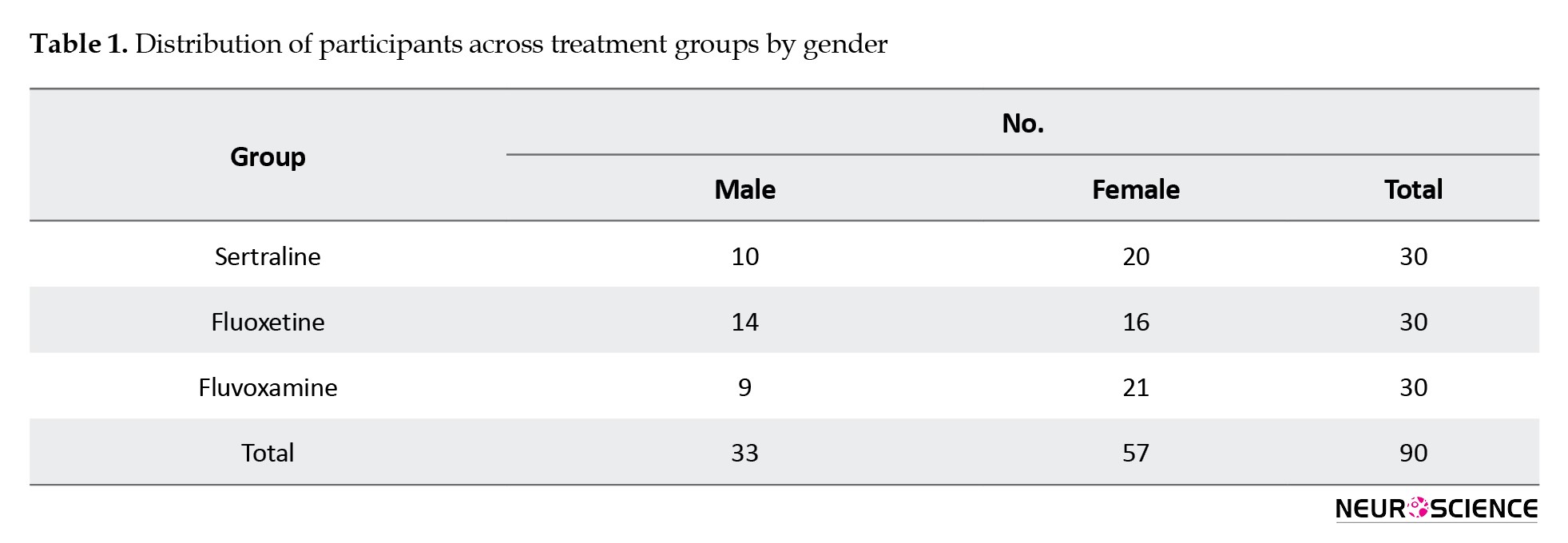
Distribution of participants in treatment groups by gender (Table 1): The study enrolled 30 participants in each of the three treatment arms: the sertraline group (10 males, 20 females), the fluoxetine group (14 males, 16 females), and the fluvoxamine group (9 males, 21 females).
Age characteristics of participants by gender (Table 2): Male participants (n=33) had a Mean±SE age of 34.9±1.8 years, ranging from 18 to 60 years.
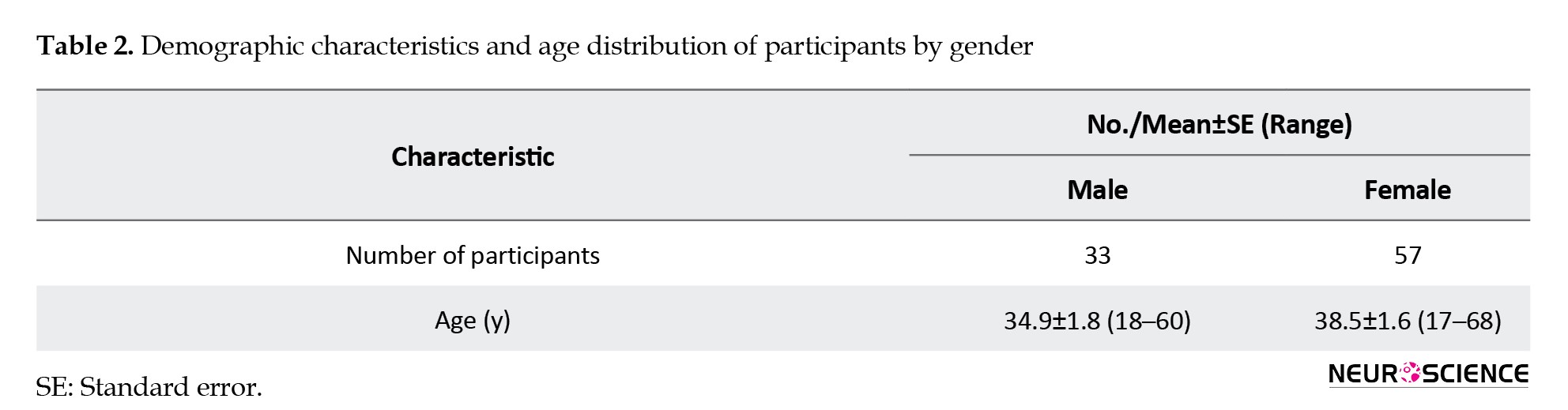
Female participants (n=57) had a Mean±SE age of 38.5±1.6 years, ranging from 17 to 68 years.
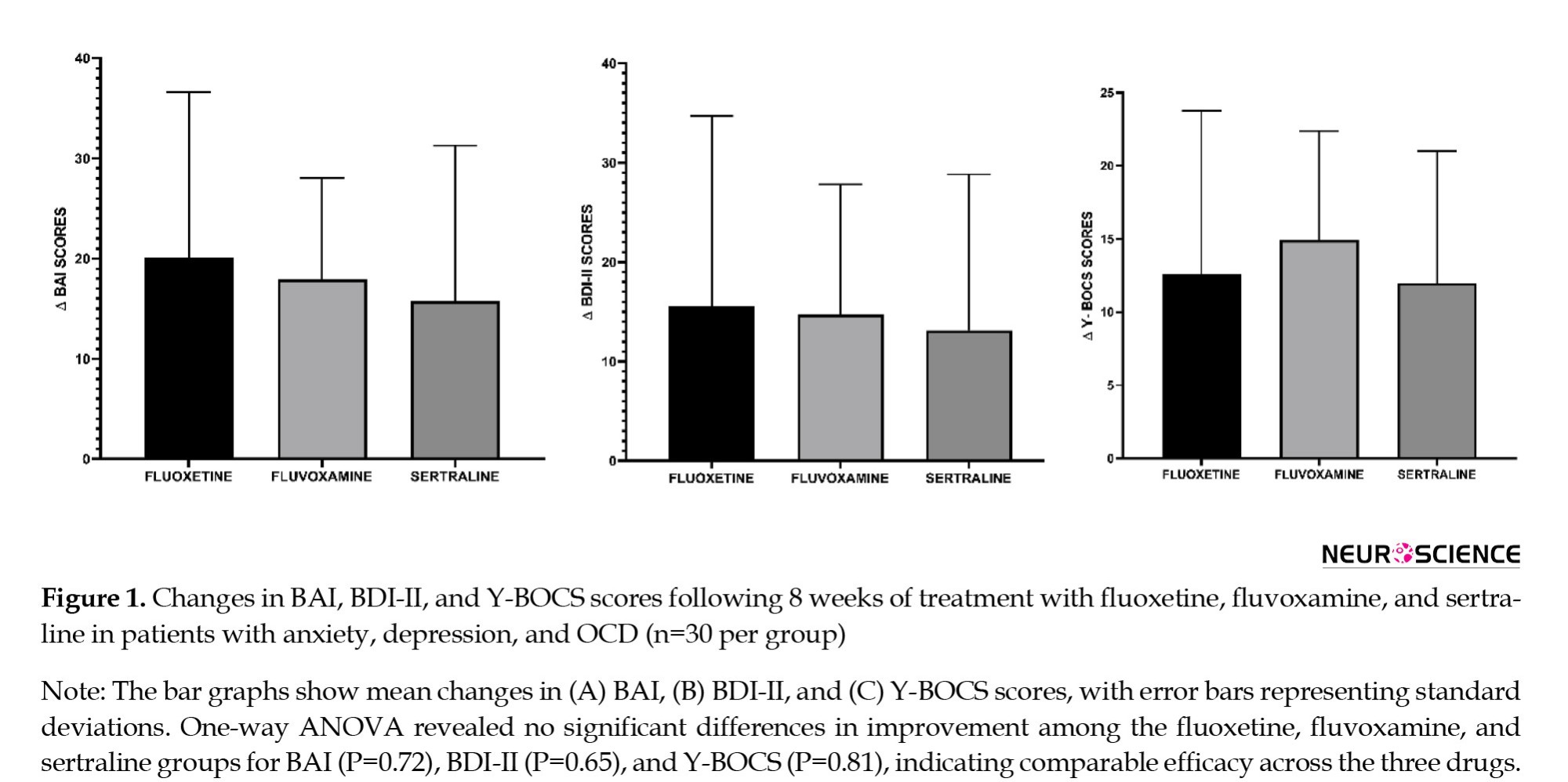
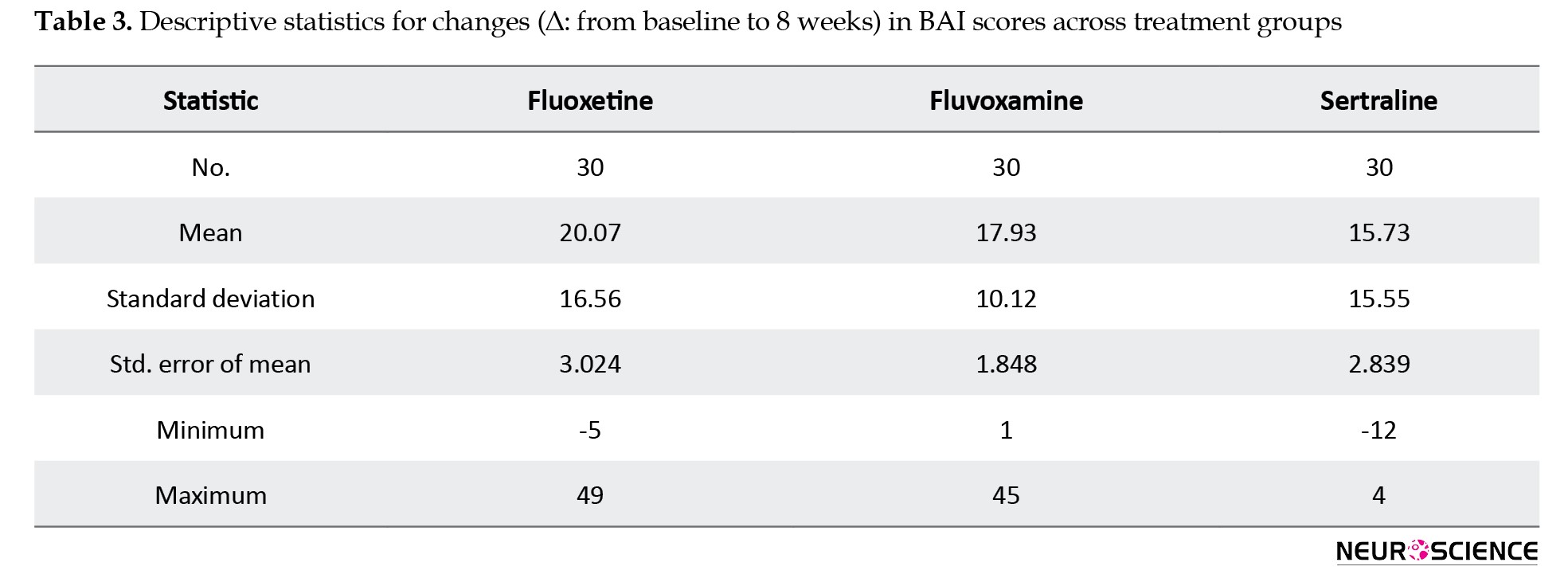
The efficacy of the three drugs—fluoxetine, fluvoxamine, and sertraline—in reducing anxiety symptoms was evaluated using changes in BAI scores (Δ BAI). All three treatment groups showed a reduction in mean anxiety scores over the treatment period.
Specifically, the mean reduction in anxiety score (Δ BAI) was 20.07±16.56 in the fluoxetine group, 17.93±10.12 in the fluvoxamine group, and 15.73±15.55 in the sertraline group.
Although numerical differences were observed in the mean reduction of scores between the three groups—fluoxetine showing the largest mean reduction and sertraline the smallest—based on one-way ANOVA results, these differences were not statistically significant (Table 3, Figure 1).
Anxiety disorders, major depressive disorder (MDD), and obsessive-compulsive disorder (OCD) are among the most prevalent and debilitating psychiatric disorders worldwide, imposing a significant burden on individuals and public health (Sharma et al., 2021). These disorders not only lead to considerable mental distress, functional impairment in various life domains, and reduced quality of life, but also increase the risk of other health problems. For example, they raise the risk of suicide by increasing suicidal ideation. Comorbidity among these disorders is also common, with many individuals with OCD experiencing episodes of major depression (Arroll et al., 2005; Cartwright & Hollander, 1998).
Pharmacological treatments, particularly selective serotonin reuptake inhibitors (SSRIs), are considered first-line therapy for these disorders (Bandelow et al., 2012). These drugs work by increasing the concentration of serotonin, a key neurotransmitter that regulates mood, anxiety, and obsessive thoughts in the synaptic cleft. Fluoxetine, fluvoxamine, and sertraline are three well-known and widely used drugs from the SSRI family. Their efficacy has been demonstrated in numerous studies for the treatment of each of these three disorders individually (Arroll et al., 2005; Bloch et al., 2010; Geddes et al., 2007; Cartwright & Hollander, 1998).
Fluoxetine, one of the first SSRIs introduced, is known for its long half-life, which helps stabilize drug levels in the body. Sertraline is often favored since it is well-tolerated and is a relatively safer choice during pregnancy and breastfeeding. Fluvoxamine is also a widely prescribed medication, particularly for the treatment of OCD (Cartwright & Hollander, 1998).
Despite the well-established overall efficacy of SSRIs, individual responses to different drugs within this class vary. Subtle differences in pharmacokinetics, pharmacodynamics, side effect profiles, and efficacy on specific symptoms of each disorder make choosing the most appropriate SSRI for a particular patient a clinical challenge. Some studies have compared these drugs pairwise. For example, one study compared the efficacy of fluvoxamine and sertraline in treating major depression (Rossini et al., 2005). Furthermore, systematic reviews and meta-analyses have generally supported the efficacy and tolerability of SSRIs in depression, anxiety disorders, and OCD; however, no consistent superiority of one SSRI over another has been established, highlighting the need for further comparative studies in specific clinical populations (Arroll et al., 2005; Cartwright & Hollander, 1998; Jakubovski et al., 2019).
There is also a notable absence of studies that directly compare the effectiveness of fluoxetine, fluvoxamine, and sertraline in a randomized controlled clinical trial. Such a trial would simultaneously test all three drugs against each other for treating the three common disorders: anxiety, depression, and OCD. This kind of research would offer crucial evidence to help clinicians make better decisions, allowing them to select the most suitable treatment for a patient based on their specific needs and the unique profile of each drug.
Therefore, the aim of this randomized controlled clinical trial was to compare the efficacy of fluoxetine, fluvoxamine, and sertraline in patients with anxiety disorders, depression, and/or OCD. The results are expected to help clarify the differences and similarities between these three drugs and provide more practical guidance for clinical practitioners in selecting the most appropriate treatment for patients.
SSRIs are established as a first-line psychopharmacological treatment for MDD, anxiety disorders, and OCD due to their favorable efficacy and tolerability profiles. Among the most widely prescribed agents in this class are sertraline, fluoxetine, and fluvoxamine, each supported by a substantial body of evidence validating its use for these conditions. However, despite their widespread application, the question of their comparative efficacy remains a subject of ongoing clinical debate. While individual studies have demonstrated the effectiveness of each medication, there is a notable lack of comprehensive, head-to-head research that directly compares the superiority of one over the others across the distinct diagnostic categories of OCD, anxiety, and depression. This gap in the literature, compounded by variations in patient response and side-effect profiles, complicates clinical decision-making and gives rise to a critical research question: Is there a demonstrable priority of efficacy among sertraline, fluoxetine, and fluvoxamine in the treatment of these highly prevalent disorders?
Materials and Methods
This study was conducted at Imam Hossein Hospital in Tehran, Iran, from September 2022 to September 2024.
Instrument
To assess the severity of anxiety, depression, and OCD symptoms among participants, the following standardized and validated self-report questionnaires were administered:
Beck anxiety inventory (BAI): The BAI is a 21-item self-report instrument designed to assess the severity of anxiety symptoms. Each item describes a common anxiety symptom, and the respondents indicate how much they have been bothered by that symptom during the past week, based on a four-point Likert scale ranging from 0 (not at all) to 3 (severe, I couldn’t stand it). The total score, calculated by summing the individual item scores, can range from 0 to 63. Based on the total score, anxiety severity is classified as follows: 0–7=minimal anxiety, 8–15=mild anxiety, 16–25=moderate anxiety, and 26–63=severe anxiety (Beck & Steer, 1993).
Beck depression inventory-second edition (BDI-II): The BDI-II is a 21-item self-report instrument used to measure the intensity of depressive symptoms in individuals aged 13 and older over the past two weeks, including the day of assessment. Each item presents a set of four statements (scored 0 to 3) that reflect the severity of a specific depressive symptom, and the respondents select the option that best describes their feelings. The total score ranges from 0 to 63. Based on the total score, depression severity is classified as follows: 0–13 minimal, 14–19 mild, 20–28 moderate, and 29–63 severe depression (Jackson-Koku, 2016).
Yale-Brown obsessive-compulsive scale (Y-BOCS): The Y-BOCS is a specialized instrument consisting of 10 items designed to assess the severity of OCD symptoms over the past week. The first five items assess obsessions, and the second five assess compulsions, with each item evaluating aspects, such as time spent, functional impairment, distress, resistance, and control on a five-point Likert scale from 0 (no symptoms) to 4 (extremely severe symptoms). The total score is the sum of all 10 items, ranging from 0 to 40, with higher scores indicating greater severity of OCD symptoms. Generally, scores of 0–7 indicate subclinical symptoms, 8–15 indicate mild symptoms, 16–23 indicate moderate symptoms, 24–31 demonstrate severe symptoms, and 32–40 demonstrate very severe symptoms (Goodman et al., 1989).
Procedures
Patients were randomly assigned to one of three treatment groups: fluoxetine (20 mg), fluvoxamine (150 mg), or sertraline (100 mg). After an eight-week treatment period, patients completed the questionnaires again. This allowed for the assessment of improvement by comparing their scores before and after the treatment.
All questionnaires were validated Persian translations of the original English versions.
Statistical analysis
For the BDI-II, a reduction of 17.5% or at least 11 points in the total score was considered a treatment response.
For the BAI, a reduction of 36% or at least 22 points in the total score was considered a treatment response.
For the Y-BOCS, a reduction of 32% or at least 14 points in the total score was considered a treatment response.
In this study, GraphPad Prism software, version 8 was used. Paired t-tests were applied for pre- and post-treatment comparisons. The Kolmogorov-Smirnov test confirmed that the data were normally distributed. One-way analysis of variance (ANOVA) was used to compare the three drug groups in reducing questionnaire scores. The significance level for all tests was set at P<0.05.
Results
A total of 90 participants were enrolled in the study. Of these, 33(36.7%) were male and 57(63.3%) were female.
Distribution of participants in treatment groups by gender (Table 1): The study enrolled 30 participants in each of the three treatment arms: the sertraline group (10 males, 20 females), the fluoxetine group (14 males, 16 females), and the fluvoxamine group (9 males, 21 females).
Age characteristics of participants by gender (Table 2): Male participants (n=33) had a Mean±SE age of 34.9±1.8 years, ranging from 18 to 60 years.
Female participants (n=57) had a Mean±SE age of 38.5±1.6 years, ranging from 17 to 68 years.
The efficacy of the three drugs—fluoxetine, fluvoxamine, and sertraline—in reducing anxiety symptoms was evaluated using changes in BAI scores (Δ BAI). All three treatment groups showed a reduction in mean anxiety scores over the treatment period.
Specifically, the mean reduction in anxiety score (Δ BAI) was 20.07±16.56 in the fluoxetine group, 17.93±10.12 in the fluvoxamine group, and 15.73±15.55 in the sertraline group.
Although numerical differences were observed in the mean reduction of scores between the three groups—fluoxetine showing the largest mean reduction and sertraline the smallest—based on one-way ANOVA results, these differences were not statistically significant (Table 3, Figure 1).
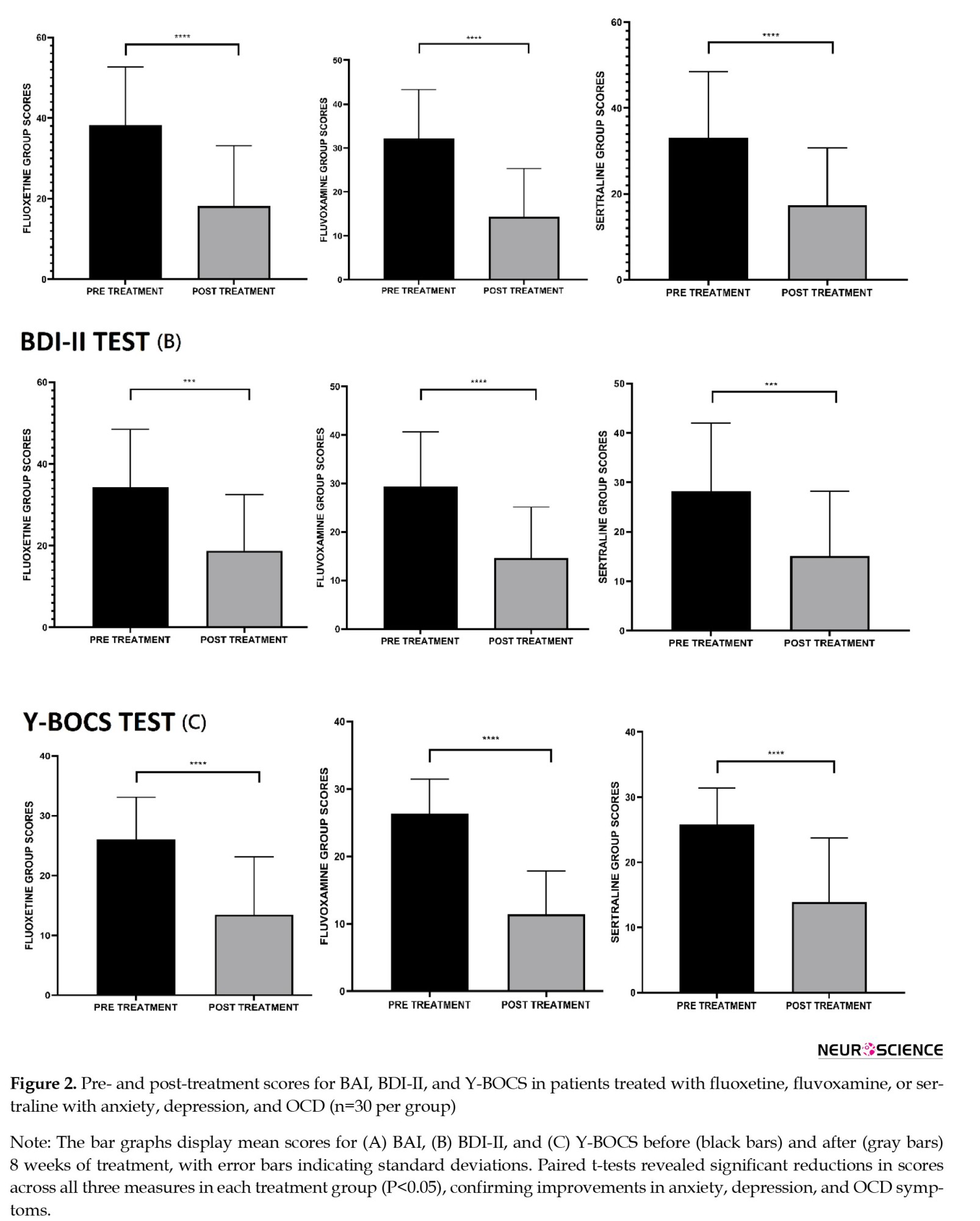
Pre- and post-treatment scores for BAI, BDI-II, and Y-BOCS across the three treatment groups are shown in Figure 2.
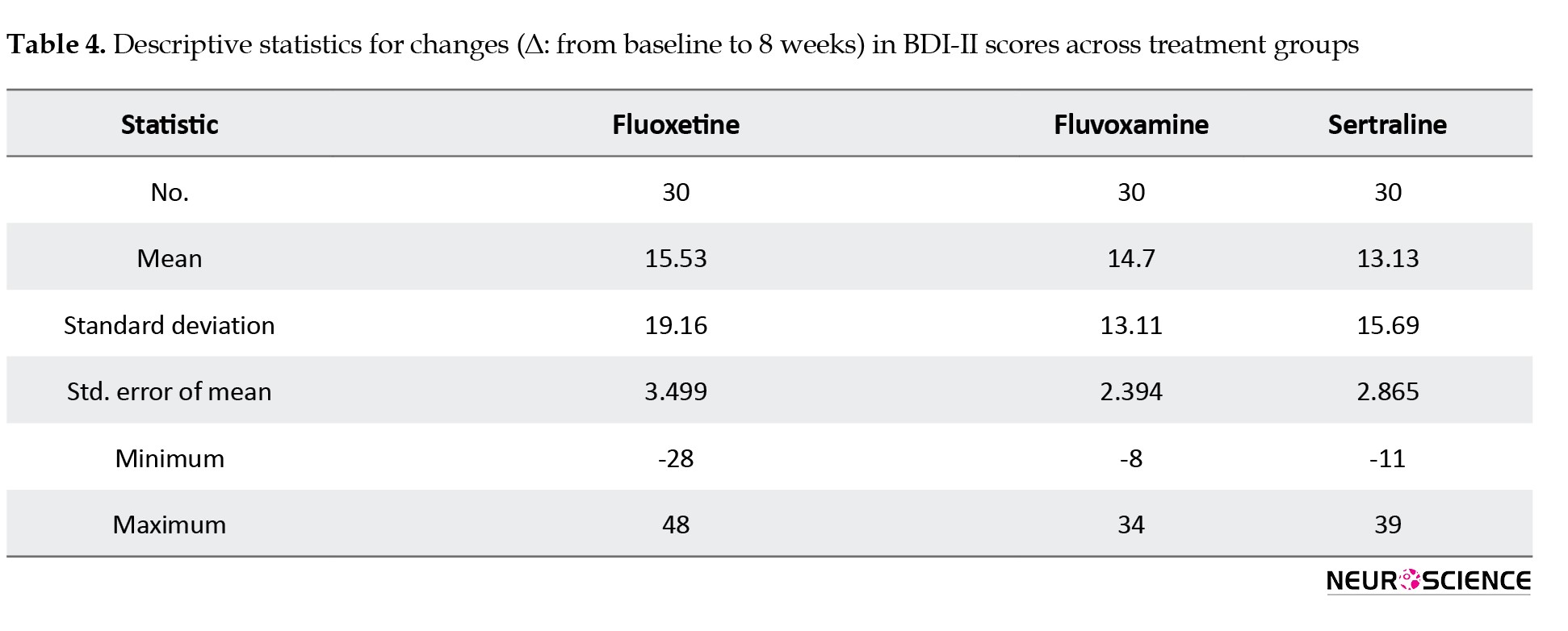
The effect of the three drugs—fluoxetine, fluvoxamine, and sertraline—on reducing depressive symptoms was evaluated by examining changes in BDI-II scores (Δ BDI-II). Each group included 30 participants. As shown in the mean scores, all three drugs, on average, reduced depression scores, indicating symptomatic improvement. The fluoxetine group showed the largest mean reduction (15.53), followed by the fluvoxamine group (14.7) and the sertraline group (13.13).
However, despite these numerical differences, one-way ANOVA results showed that these differences were not statistically significant. Based on the findings of this study and the statistical analysis performed, none of the three drugs—fluoxetine, fluvoxamine, or sertraline—was identified as superior in reducing the severity of depressive symptoms compared to the others. In other words, all three drugs were generally effective in improving depressive symptoms, but the observed difference did not reach statistical significance.
This finding suggests that, in the studied sample, all three drugs showed broadly similar therapeutic effects on depressive symptoms. The reported standard deviations, particularly for the fluoxetine and sertraline groups, suggested considerable variability in individual responses to these treatments (Table 4, Figure 1).
In this study, the efficacy of the three drugs—fluoxetine, fluvoxamine, and sertraline—in reducing OCD symptoms was evaluated using changes in Y-BOCS scores (Δ Y-BOCS). Each treatment group included 30 participants.
As shown in Table 5, the mean reduction in Y-BOCS scores was 12.57±11.21 in the fluoxetine group, 14.93±7.44 in the fluvoxamine group, and 11.97±9.05 in the sertraline group.
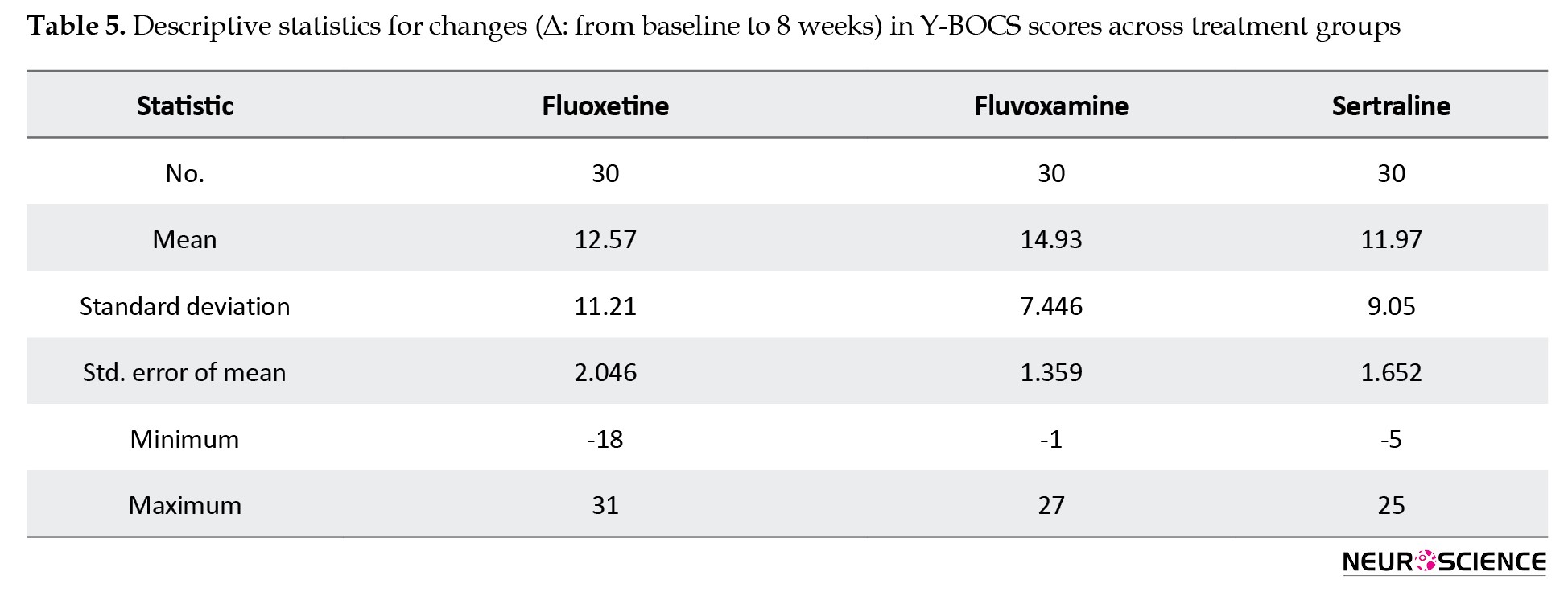
As demonstrated by the mean scores, each of the three drugs led to a decrease in Y-BOCS ratings, indicating a positive symptomatic response in individuals with OCD.
On this scale, the fluvoxamine group showed the largest mean reduction (14.93), followed by the fluoxetine (12.57) and sertraline (11.97) groups. Additionally, the standard deviation in the fluvoxamine group was lower than that in the other two groups, indicating less dispersion and greater homogeneity in the treatment response. However, despite these numerical differences in mean reductions and standard deviations, the results of one-way ANOVA showed that these differences were not statistically significant. Based on these findings, none of the three drugs—fluoxetine, fluvoxamine, or sertraline— was identified as superior in reducing the severity of obsessive-compulsive symptoms. All three drugs were generally effective, but the observed differences did not reach statistical significance or reflect a true difference in the wider population.
Discussion
This study compared the effectiveness of three common SSRIs—fluoxetine, fluvoxamine, and sertraline—for treating anxiety disorders, MDD, and OCD. The results showed that fluoxetine, fluvoxamine, and sertraline were equally effective in reducing anxiety, depression, and OCD symptoms. The absence of significant differences among the three drugs is consistent with prior evidence suggesting comparable efficacy of SSRIs. Given this similarity, treatment choice should be based on other clinical factors, including side effect profiles, potential interactions, pharmacokinetic characteristics, patient comorbidities, and individual preferences (Hemels et al., 2004). The variability in patient responses observed in this study further emphasizes the need for individualized treatment and careful monitoring.
Some limitations should be noted. The eight-week duration may not capture long-term outcomes, and the relatively small sample size may have limited detection of subtle differences. Subgroup analyses could also clarify whether specific patient characteristics predict differential response. Future studies with larger, more diverse populations, longer follow-up periods, and broader outcome measures such as functional recovery and quality of life are recommended. Investigating biomarkers of treatment response may also contribute to more personalized therapeutic strategies.
Conclusion
This randomized controlled trial demonstrated that fluoxetine, fluvoxamine, and sertraline are equally effective in reducing symptoms of anxiety, depression, and OCD.
Since no significant differences in efficacy were observed, treatment decisions should primarily rely on clinical considerations, such as side effect profile, drug interactions, availability, cost, and patient preference. The findings support the use of all three SSRIs as first-line options while emphasizing individualized treatment planning.
Ethical Considerations
Compliance with ethical guidelines
This study was conducted in accordance with ethical guidelines. This study was approved by the Research Ethics Committee of Shahid Beheshti University of Medical Sciences, Tehran, Iran (Code: IR.SBMU.PHNS.REC.1402.142). Informed consent was obtained from all participants.
Funding
This research did not receive any grant from funding agencies in the public, commercial, or non-profit sectors.
Authors' contributions
All authors contributed equally to the conception and design of the study, data collection and analysis, interpretation of the results and drafting of the manuscript. Each author approved the final version of the manuscript for submission.
Conflict of interest
The authors declared no conflict of interest.
References
Arroll, B., Macgillivray, S., Ogston, S., Reid, I., Sullivan, F., & Williams, B., et al. (2005). Efficacy and tolerability of tricyclic antidepressants and SSRIs compared with placebo for treatment of depression in primary care: A meta-analysis. Annals of Family Medicine, 3(5), 449–456. [DOI:10.1370/afm.349] [PMID]
Bandelow, B., Sher, L., Bunevicius, R., Hollander, E., Kasper, S., & Zohar, J., et al. (2012). Guidelines for the pharmacological treatment of anxiety disorders, obsessive-compulsive disorder and posttraumatic stress disorder in primary care. International Journal of Psychiatry in Clinical Practice, 16(2), 77-84. [DOI:10.3109/13651501.2012.667114] [PMID]
Beck, A. T., & Steer, R. A. (1993). Beck anxiety inventory. San Antonio: The Psychological Corporation Harcourt Brace & Company. [Link]
Bloch, M. H., McGuire, J., Landeros-Weisenberger, A., Leckman, J. F., & Pittenger, C. (2010). Meta-analysis of the dose-response relationship of SSRI in obsessive-compulsive disorder. Molecular Psychiatry, 15(8), 850-855. [DOI:10.1038/mp.2009.50] [PMID]
Cartwright, C., & Hollander, E. (1998). SSRIs in the Treatment of obsessive-compulsive disorder. Depression and Anxiety, 8(S1), 105-113. [DOI:10.1002/(SICI)1520-6394(1998)8:1+<105::AID-DA16>3.0.CO;2-T]
Geddes, J. R., Freemantle, N., Mason, J., Eccles, M. P., & Boynton, J. (2007). WITHDRAWN: Selective serotonin reuptake inhibitors (SSRIs) versus other antidepressants for depression. The Cochrane Database of Systematic Reviews, 2006(3), CD001851. [DOI:10.1002/14651858.cd001851.pub2] [PMID]
Goodman, W. K., Price, L. H., Rasmussen, S. A., Mazure, C., Fleischmann, R. L., & Hill, C. L., et al. (1989). The Yale-Brown obsessive compulsive scale: I. Development, use, and reliability. Archives of General Psychiatry, 46(11), 1006-1011. [DOI:10.1001/archpsyc.1989.01810110048007] [PMID]
Hemels, M. E., Kasper, S., Walter, E., & Einarson, T. R. (2004). Cost-effectiveness analysis of escitalopram: a new SSRI in the first-line treatment of major depressive disorder in Austria. Current Medical Research and Opinion, 20(6), 869-878. [DOI:10.1185/030079904125003737] [PMID]
Jackson-Koku, G. (2016). Beck depression inventory. Occupational Medicine, 66(2), 174-175. [DOI:10.1093/occmed/kqv087]
Rossini, D., Serretti, A., Franchini, L., Mandelli, L., Smeraldi, E., & De Ronchi, D., et al. (2005). Sertraline versus fluvoxamine in the treatment of elderly patients with major depression: A double-blind, randomized trial. Journal of Clinical Psychopharmacology, 25(5), 471–475. [DOI:10.1097/01.jcp.0000177548.28961.e7]
Sharma, E., Sharma, L. P., Balachander, S., Lin, B., & Manohar, H., et al. (2021). Comorbidities in obsessive-compulsive disorder across the lifespan: A systematic review and meta-analysis. Frontiers in Psychiatry, 12, 703701. [DOI:10.3389/fpsyt.2021.703701]
However, despite these numerical differences, one-way ANOVA results showed that these differences were not statistically significant. Based on the findings of this study and the statistical analysis performed, none of the three drugs—fluoxetine, fluvoxamine, or sertraline—was identified as superior in reducing the severity of depressive symptoms compared to the others. In other words, all three drugs were generally effective in improving depressive symptoms, but the observed difference did not reach statistical significance.
This finding suggests that, in the studied sample, all three drugs showed broadly similar therapeutic effects on depressive symptoms. The reported standard deviations, particularly for the fluoxetine and sertraline groups, suggested considerable variability in individual responses to these treatments (Table 4, Figure 1).
In this study, the efficacy of the three drugs—fluoxetine, fluvoxamine, and sertraline—in reducing OCD symptoms was evaluated using changes in Y-BOCS scores (Δ Y-BOCS). Each treatment group included 30 participants.
As shown in Table 5, the mean reduction in Y-BOCS scores was 12.57±11.21 in the fluoxetine group, 14.93±7.44 in the fluvoxamine group, and 11.97±9.05 in the sertraline group.
As demonstrated by the mean scores, each of the three drugs led to a decrease in Y-BOCS ratings, indicating a positive symptomatic response in individuals with OCD.
On this scale, the fluvoxamine group showed the largest mean reduction (14.93), followed by the fluoxetine (12.57) and sertraline (11.97) groups. Additionally, the standard deviation in the fluvoxamine group was lower than that in the other two groups, indicating less dispersion and greater homogeneity in the treatment response. However, despite these numerical differences in mean reductions and standard deviations, the results of one-way ANOVA showed that these differences were not statistically significant. Based on these findings, none of the three drugs—fluoxetine, fluvoxamine, or sertraline— was identified as superior in reducing the severity of obsessive-compulsive symptoms. All three drugs were generally effective, but the observed differences did not reach statistical significance or reflect a true difference in the wider population.
Discussion
This study compared the effectiveness of three common SSRIs—fluoxetine, fluvoxamine, and sertraline—for treating anxiety disorders, MDD, and OCD. The results showed that fluoxetine, fluvoxamine, and sertraline were equally effective in reducing anxiety, depression, and OCD symptoms. The absence of significant differences among the three drugs is consistent with prior evidence suggesting comparable efficacy of SSRIs. Given this similarity, treatment choice should be based on other clinical factors, including side effect profiles, potential interactions, pharmacokinetic characteristics, patient comorbidities, and individual preferences (Hemels et al., 2004). The variability in patient responses observed in this study further emphasizes the need for individualized treatment and careful monitoring.
Some limitations should be noted. The eight-week duration may not capture long-term outcomes, and the relatively small sample size may have limited detection of subtle differences. Subgroup analyses could also clarify whether specific patient characteristics predict differential response. Future studies with larger, more diverse populations, longer follow-up periods, and broader outcome measures such as functional recovery and quality of life are recommended. Investigating biomarkers of treatment response may also contribute to more personalized therapeutic strategies.
Conclusion
This randomized controlled trial demonstrated that fluoxetine, fluvoxamine, and sertraline are equally effective in reducing symptoms of anxiety, depression, and OCD.
Since no significant differences in efficacy were observed, treatment decisions should primarily rely on clinical considerations, such as side effect profile, drug interactions, availability, cost, and patient preference. The findings support the use of all three SSRIs as first-line options while emphasizing individualized treatment planning.
Ethical Considerations
Compliance with ethical guidelines
This study was conducted in accordance with ethical guidelines. This study was approved by the Research Ethics Committee of Shahid Beheshti University of Medical Sciences, Tehran, Iran (Code: IR.SBMU.PHNS.REC.1402.142). Informed consent was obtained from all participants.
Funding
This research did not receive any grant from funding agencies in the public, commercial, or non-profit sectors.
Authors' contributions
All authors contributed equally to the conception and design of the study, data collection and analysis, interpretation of the results and drafting of the manuscript. Each author approved the final version of the manuscript for submission.
Conflict of interest
The authors declared no conflict of interest.
References
Arroll, B., Macgillivray, S., Ogston, S., Reid, I., Sullivan, F., & Williams, B., et al. (2005). Efficacy and tolerability of tricyclic antidepressants and SSRIs compared with placebo for treatment of depression in primary care: A meta-analysis. Annals of Family Medicine, 3(5), 449–456. [DOI:10.1370/afm.349] [PMID]
Bandelow, B., Sher, L., Bunevicius, R., Hollander, E., Kasper, S., & Zohar, J., et al. (2012). Guidelines for the pharmacological treatment of anxiety disorders, obsessive-compulsive disorder and posttraumatic stress disorder in primary care. International Journal of Psychiatry in Clinical Practice, 16(2), 77-84. [DOI:10.3109/13651501.2012.667114] [PMID]
Beck, A. T., & Steer, R. A. (1993). Beck anxiety inventory. San Antonio: The Psychological Corporation Harcourt Brace & Company. [Link]
Bloch, M. H., McGuire, J., Landeros-Weisenberger, A., Leckman, J. F., & Pittenger, C. (2010). Meta-analysis of the dose-response relationship of SSRI in obsessive-compulsive disorder. Molecular Psychiatry, 15(8), 850-855. [DOI:10.1038/mp.2009.50] [PMID]
Cartwright, C., & Hollander, E. (1998). SSRIs in the Treatment of obsessive-compulsive disorder. Depression and Anxiety, 8(S1), 105-113. [DOI:10.1002/(SICI)1520-6394(1998)8:1+<105::AID-DA16>3.0.CO;2-T]
Geddes, J. R., Freemantle, N., Mason, J., Eccles, M. P., & Boynton, J. (2007). WITHDRAWN: Selective serotonin reuptake inhibitors (SSRIs) versus other antidepressants for depression. The Cochrane Database of Systematic Reviews, 2006(3), CD001851. [DOI:10.1002/14651858.cd001851.pub2] [PMID]
Goodman, W. K., Price, L. H., Rasmussen, S. A., Mazure, C., Fleischmann, R. L., & Hill, C. L., et al. (1989). The Yale-Brown obsessive compulsive scale: I. Development, use, and reliability. Archives of General Psychiatry, 46(11), 1006-1011. [DOI:10.1001/archpsyc.1989.01810110048007] [PMID]
Hemels, M. E., Kasper, S., Walter, E., & Einarson, T. R. (2004). Cost-effectiveness analysis of escitalopram: a new SSRI in the first-line treatment of major depressive disorder in Austria. Current Medical Research and Opinion, 20(6), 869-878. [DOI:10.1185/030079904125003737] [PMID]
Jackson-Koku, G. (2016). Beck depression inventory. Occupational Medicine, 66(2), 174-175. [DOI:10.1093/occmed/kqv087]
Rossini, D., Serretti, A., Franchini, L., Mandelli, L., Smeraldi, E., & De Ronchi, D., et al. (2005). Sertraline versus fluvoxamine in the treatment of elderly patients with major depression: A double-blind, randomized trial. Journal of Clinical Psychopharmacology, 25(5), 471–475. [DOI:10.1097/01.jcp.0000177548.28961.e7]
Sharma, E., Sharma, L. P., Balachander, S., Lin, B., & Manohar, H., et al. (2021). Comorbidities in obsessive-compulsive disorder across the lifespan: A systematic review and meta-analysis. Frontiers in Psychiatry, 12, 703701. [DOI:10.3389/fpsyt.2021.703701]
Type of Study: Original |
Subject:
Cognitive Neuroscience
Received: 2025/06/16 | Accepted: 2025/01/2 | Published: 2026/03/1
Received: 2025/06/16 | Accepted: 2025/01/2 | Published: 2026/03/1
Send email to the article author
| Rights and permissions | |
 |
This work is licensed under a Creative Commons Attribution-NonCommercial 4.0 International License. |

Copyright © The Author(s);
This is an open access article distributed under the terms of the Creative Commons Attribution License (CC-By-NC), which permits use, distribution, and reproduction in any medium, provided the original work is properly cited and is not used for commercial purposes.
Contact Information